The Role of Religion in the Development and Abandonment of African Culture

Africa is allegedly home to the most religious people in the world, with deeply ingrained beliefs, rituals, and customs. Religion is believed to be one of the earliest forms of human culture, predating even agriculture and cities. In his book “Sapiens: A Brief History of Humankind,” Yuval Noah Harari argues that religion played a significant role in the development of human civilization. Religion provided a way for humans to create and maintain shared beliefs and values, fostering cooperation and social cohesion. Additionally, religion gave a sense of meaning and purpose to people’s lives, offering explanations for the natural world and human existence, and providing a sense of order and stability. Furthermore, religion created and reinforced social hierarchies and power structures. Thus, religion played a crucial role in providing a framework for shared beliefs, social cohesion, and meaning-making in human societies throughout history.
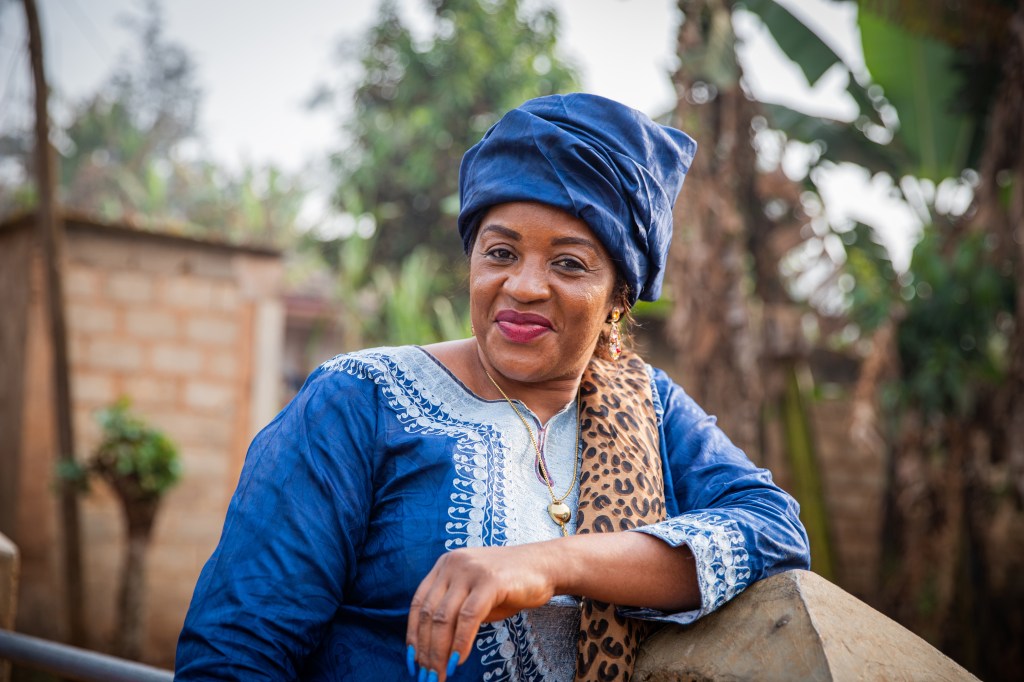
Portrait of an attractive and smiling 50 year old African woman dressed in a traditional African dress

However, what role did religion play in the abandonment of African culture and how did it aid in promoting racism and the inferiority of the black race? During the pre-colonial era, when missionaries arrived in Africa, their mission was to Christianize the black people with the presumption that their ways were primitive and their beliefs heathen. The missionaries believed in the biblical account of Ham, one of the three sons of Noah, who was allegedly black and cursed. This belief, coupled with the popular 19th-century pseudoscience that used dubious scientific methods to prove the superiority of the white race over the black race, led to the justification of slavery, colonization, and Christianization of Africa.

Christianity in itself is neither bad nor racist, nor is religion in general. But it was used as a tool to systematically lead Africans to abandon their cultures and traditions, most of which were good. The indoctrination of the continent has led to the vast majority abandoning the values of hard work and sacrifice for beliefs in prayer and miracles. As a result, there are numerous churches all over Africa where believers flock to and give their last dime to get a miracle.

Religion, in my opinion, did not set Africans free, but rather bound them to belief systems that left them vulnerable to exploitation. Africans quickly forgot that the promised paradise was what they were already living in. Instead of moving at the same pace as the rest of the world in terms of development, they were reduced to ethnic and religious wars as the colonizers looted the natural wealth of the continent.

Should Africa abandon religion? Absolutely not. And replace it with what? Remember that religion was there long before racism and colonialism existed. Belief is the basis of the morals of society. Once beliefs are eradicated, the society starts to decay. The only thinkable solution, in my estimation, would be for everyone to start accepting and appreciating African cultures. People, including Africans, should educate themselves on the deep-rooted beliefs that Blacks are inferior to other races.

Where would you start? Do you really know how ancient African societies lived? Are there practices and customs that would have been helpful for modern society? How can we help Africans use their rich natural resources to develop themselves? Speaking of natural resources, could they be the cause of Africa being the poorest and least developed continent in the world? We will cover the topic of natural resources in the next blog.


“How to Win at Life: Unlocking the Hidden Lessons of Chess from Strategy and Determination to Self-Discipline and Focus”

Chess is a game that has been enjoyed for centuries by people of all ages and walks of life. It can be seen as a metaphor for life, with the pieces and movements on the board representing different aspects of our own lives. In this blog, we will explore the life lessons and personal development opportunities that can be gained from playing chess.

One important lesson from chess is the value of strategy. To win a game, players must think ahead and plan their moves carefully. This requires strategic thinking and problem-solving skills, which are also essential in life. Whether it’s achieving a personal goal or succeeding in a career, having a clear plan and the ability to think ahead can help you achieve your objectives.

Another valuable lesson from chess is the importance of persistence and determination. Even the best players lose games from time to time, and it’s important to remember that setbacks and failures are a natural part of life. Successful people are those who can keep going even when things don’t go as planned. By learning to persevere and stay determined, you can achieve your goals and overcome obstacles.

Specific strategies and techniques can also be learned from chess. For example, controlling the center of the board is key to dominating the game and putting pressure on your opponent’s pieces. In life, it’s also important to focus on what’s most important and have control over it to set yourself up for success.

In addition, each piece in chess has its own unique characteristics and abilities, which can be seen as representing different personality traits in the context of human society. The hierarchical nature of the game, with the king at the top and the pawns at the bottom, can also be seen as a metaphor for how society is organized.

Original Image created by nightcafe creator.

The king, who is the most powerful piece on the board, represents leadership and authority and is responsible for ensuring the safety of the other pieces. In society, leaders and those in positions of power often possess similar characteristics – they are responsible for guiding and protecting their communities, and must make difficult decisions that can affect the lives of many people.

The queen, which is the second most powerful piece in chess, represents intelligence and the ability to think strategically. The queen can move in any direction and can be a formidable opponent if used effectively. In society, those who are intelligent and able to think creatively and solve problems are often held in high regard and can achieve great things.

The bishops and knights, which are slightly less powerful than the queen, represent adaptability and the ability to navigate complex situations. Bishops can move diagonally across the board, while knights can jump over other pieces, making them highly versatile. In society, those who can adapt and navigate difficult situations are often respected for their problem-solving skills.

Finally, the rooks and pawns, which are the least powerful pieces in chess, represent hard work and the ability to grind out victories. Rooks can move horizontally and vertically across the board, while pawns can only move forward and can only capture pieces that are directly in front of them. In society, those who are willing to put in hard work and persevere through challenges are often able to achieve their goals and succeed.

Finally, chess requires self-discipline and focus. To succeed, players must be able to concentrate and stay focused on the task at hand, even when things get tough. This is a valuable skill in any area of life and can help you reach your full potential.

In conclusion, chess offers many valuable lessons for life and personal development. From the importance of strategy and determination to the value of self-discipline and focus, and the ability to adapt and navigate complex situations, there are countless ways in which the game can help us grow and improve as individuals. Whether you’re a seasoned player or just starting out, there’s always something new to learn and discover.

Your mind is your Keeper, not your friend. Part 2

Your Mind

There are times when we have thoughts that we have not voluntarily actively participated in. There are thoughts that randomly pop into your mind sometimes living you aghast and questioning your own sanity.

There are two parts of our brain. The limbic small primate older part is responsible for the cocktail of hormones that causes us to have a range of moods and emotions. Then there is the cortex the large evolutionary part where thoughts originate from.

One scientist described the cortex as a supercomputer whose sole purpose is doing what a monkey brain wants. In essence, the limbic brain is the boss and how you feel dictates the thoughts you will have. Makes sense? Let’s think of an example.

You have decided to go for a run after a short distance you feel tired. What goes on in your mind? You are flooded with suggestions on how the situation should be handled. Stop and walk back home, grab a taxi, sit down for a while then decide whether you want to continue or not, slow down run at a walking pace for just 100 meters then go home, you will do it next time. The cortex was basically trying to make you feel better by suggesting that you quit on your plan to do your 5k run.

Does this not happen all the time you are on to something challenging? My big one is talking to strangers. I generally love people but am a little shy. I would rather write a text or an email than make a phone call or meet someone in person. Whenever I need to call someone or just ask for help from a total stranger a crisis meeting is quickly convened in my head and very concrete arguments are presented on why I should not approach this stranger. Every time I went against those limiting thoughts it proved that my mind was just trying to protect me by keeping in my comfort zone. The cortex was just doing its job of making sure the stress hormones the limbic was releasing are contained.

 The cortex is sceptical and analytical and the limbic languishes in emotions. That’s why when one is under the influence of drugs or alcohol their base emotions are more visible. Because psychotics shut down or slow down the cortex. One expert recommended a shot of whiskey for participants before any tough negotiations started. He argues that this will ease the tension in the room and open up channels of communication.

It also explains why when one is high, they don’t think about their bills, their annoying bosses or their hateful neighbour. The part of the brain which does the worry was sent on a short leave. I am not recommending the use of drugs and alcohol to feel good. They might make you feel good but it is very short-lived and then the watchdog will be back and hammer you with regrets.

How do you use the two parts of your brain to ensure that you have an optimal life? The cortex will definitely prevent you from jumping over a cliff. So a lot of times it is good to take the crisis meetings seriously especially when indulging yourself. The limbic will infuse in your veins the feel-good hormones and you will radiate joy and positivity.

You need to decide when to override your cortex thoughts and when the lust for happy hormones will get you in trouble and therefore delayed gratification is probably a better idea. Finally whenever you find yourself in a situation where you don’t want to be or you fail or are disappointed by your own actions. Don’t allow your cortex to beat you up with guilt and understand that you are not your thoughts and your mind is not your friend it is your keeper.