ONE FOOT FORWARD: HAPPINESS THROUGH HARDSHIP (PART 3)

The Dark Night of the Soul at 4,985 Meters

“Good morning!”

Wamururu, our guide’s voice sliced through the frozen silence of Shipton’s Camp at 2:30 AM. It was a polite irony; there was nothing ‘good’ about a morning that began in a sub-zero tent with a skull-splitting migraine. Despite sleeping fully dressed in winter jackets, gloves, and sleeping bags, the biting cold had seeped into our bones. The painkillers I had taken earlier were useless—a raindrop in an ocean of physical protest.

When I asked Wamururu for altitude sickness medication, he looked at me with the calm eyes of a man who has seen a thousand egos break. He declined. “I can’t risk the side effects during the final ascent,” he said softly.

In that moment, the voice of the “Valley Self”—the one that seeks comfort and avoids friction—began its cunning manipulation. ‘You are sick,’ my mind argued. ‘No one expects a sick man to climb a mountain. Just go back to the tent. They will all understand.’ But as I looked at my team, I realized that my surrender would be their permission to fail. I tapped into a reserve of energy I didn’t know I possessed: I wasn’t there to be comfortable; I was there to see who I was when the comfort was gone.

The Mercy of the Dark

We began the final push in total darkness. I later realized that starting at 2:30 AM is a psychological mercy; if we could see the sheer verticality of what we were about to undertake, we would have been too dejected to start. We moved in a world that only existed in the three-foot radius of our headlamps.
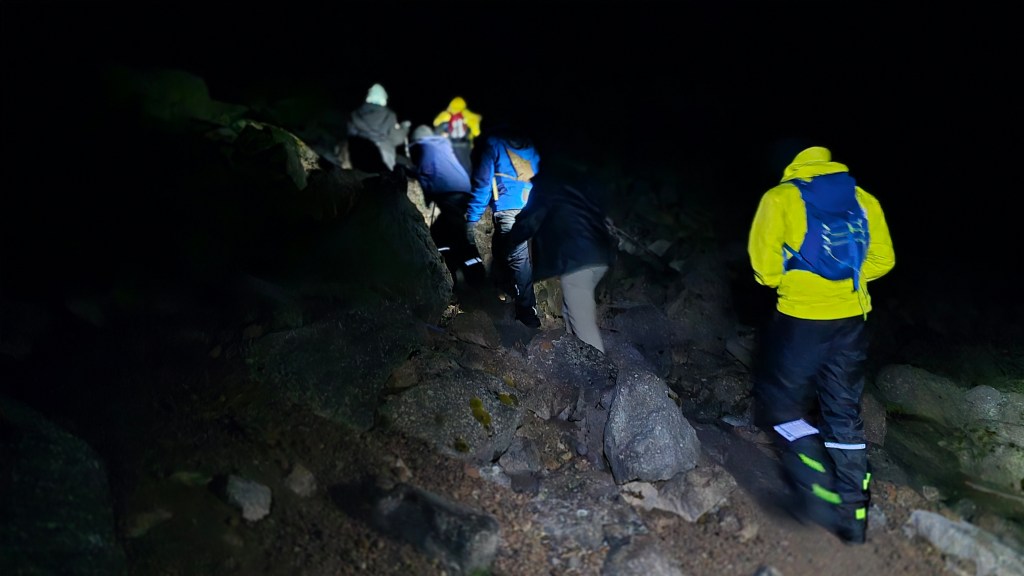
My youngest brother, David, was completely overwhelmed. The altitude was a thief, stealing his breath and his resolve. For a moment, it looked like he wouldn’t make it. The guides considered leaving him to descend, but the whole team rallied behind him. We became a single pulse—pushing him, encouraging him, refusing to let the mountain claim his spirit. We weren’t just a group of “untrained dreamers” anymore; we were a tribe.

Nature’s Twisted Humor

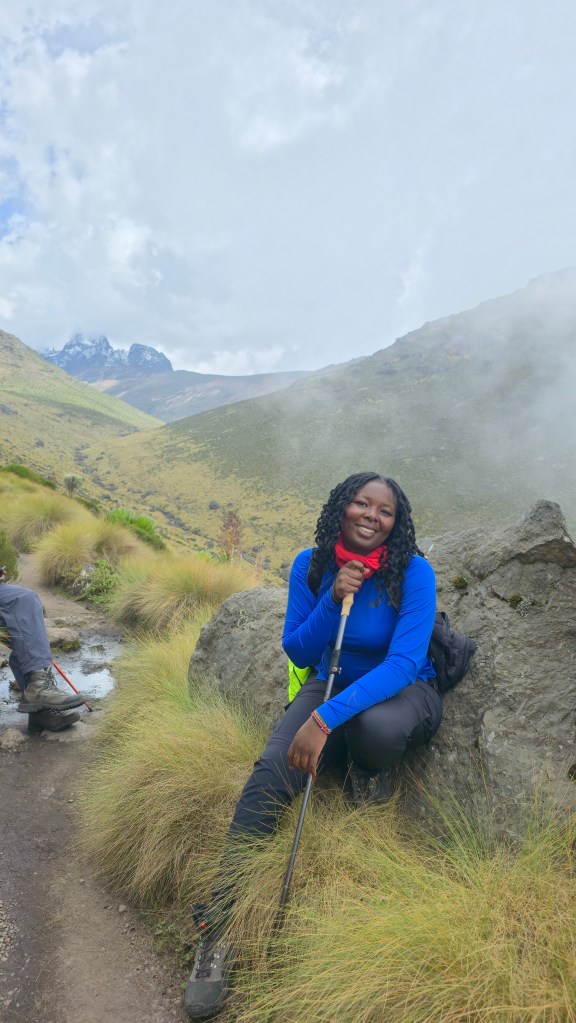
One foot forward we pushed, each step a tiny victory. I lifted my pounding head to look up at the barely visible summit, which was but a few hundred metres away, covered by thick clouds and the orange-red rays of the breaking dawn, and I knew that all that counted was to just put one foot forward. We finally stood at the summit of Point Lenana, nature greeted us with a twisted sense of humor. We expected a magnificent view of the Sunrise in the horizon and to celebrate at the summit the conquest of what seemed impossible and crazy. There was no serene sunrise or a golden glow. Instead, we were met with gushing winds, freezing snow, and a chill that threatened to turn our blood to ice. We couldn’t soak in the marvels or even take the “perfect” photos. The mountain allowed us a few fleeting minutes of triumph before demanding our immediate descent.
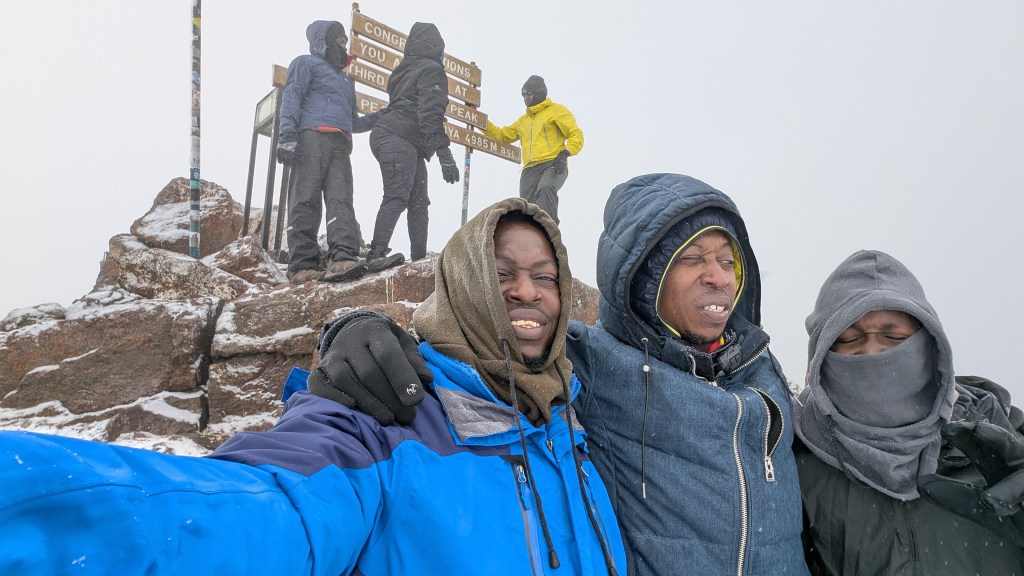
It was in those freezing, breathless moments that the true epiphanies of my quest for happiness finally crystallized:

Epiphanies from the Peak: What the Mountain Taught Me

  • The Sanctity of Friction: Most people spend their lives walking away from pain. I spent three days walking directly into it. Meaning is the byproduct of friction; the suffering is what “sanctified” the experience.
  • The Death of the Valley Mask: Exhaustion is the ultimate truth-teller. At 4,000 meters, I had to abandon my “city ego.” The mountain doesn’t care about your prayers or your status; it only responds to your pulse and determination.
  • Kirinyaga is a History Book, Not a Tourist Trap: We have viewed our landmarks through a colonial lens for too long. Standing on the throne of my ancestors with burning lungs felt like a pilgrimage of decolonizing my own body.
  • The Philosophy of the Next Step: When the summit feels like a death sentence, you focus on the next step. Endurance isn’t about strength; it’s about the refusal to stop moving.
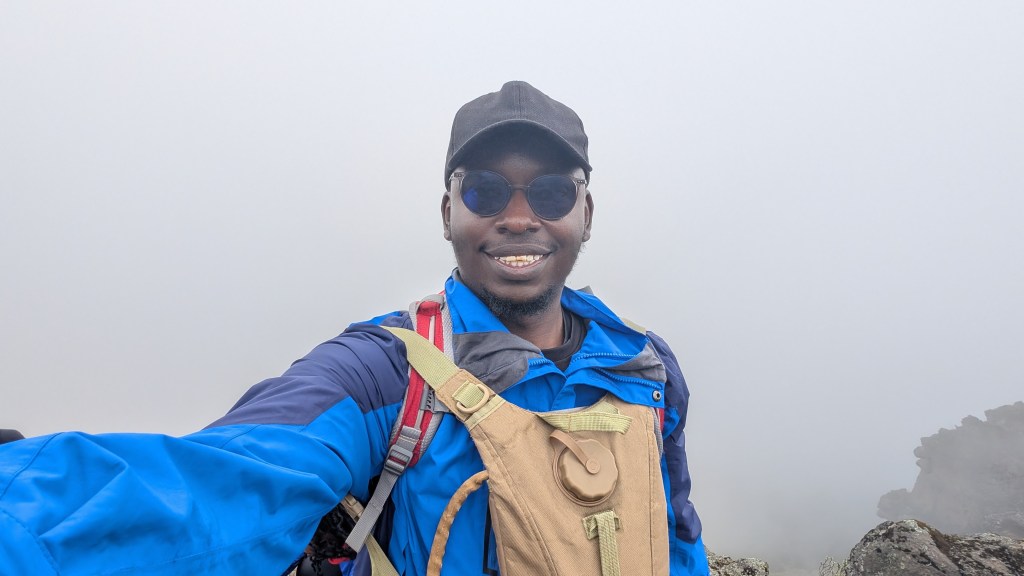
Dan Sigi: “I emptied every single ounce of energy within me. I walked until my legs felt like jelly, and at that point, the only thing I could do was keep moving forward. That’s when true grit—the very essence of the cause—took over. Your mind starts to access that hidden reservoir of energy, affirming that your goal is actually within grasp.”
Beldina Nyatichi: “The climb taught me patience and how the greatest progress comes from small, steady steps. Standing at the summit changed how I see challenges in life: I now approach them with calm and confidence, knowing that persistence, even when uncomfortable, always leads to growth. Nothing is going to stop me from making it in life now.”

I descended Kirinyaga a different man than the one who sat miserably on a couch in Austria. The “failed” businesses and the burnout hadn’t disappeared, but they had shrunk in the shadow of the mountain. I realized that true happiness isn’t the absence of struggle, but the presence of a struggle that matters.

I set out to raise funds for Sifuyo Primary School, thinking I was doing it to help the children. In reality, the mission was what carried me to the top. We are building those classrooms not just with bricks, but with the same “stubborn biology” that got us to the peak.

I am not done yet. This was the first of many challenges I will undertake for this cause. If you are currently sitting in the “comfort” of your own valley, I ask you: What is the mountain you are avoiding?

Join the Climb: Turning Pain into Progress

I reached the summit to ensure that the children in my rural village don’t have to “climb mountains” just to get a basic education. Every desk we buy and every classroom we renovate is another “six inches” toward their future.

We have conquered the peak; now, let’s build the foundation. Join me in adventures that will not only fortify your mind but also support development projects for the needy.

Let’s prove that when we climb together, no summit is out of reach.
ONE FOOT FORWARD: HAPPINESS THROUGH HARDSHIP (PART 2)

The Deceptive Handshake—When the mountain stops being a backdrop and starts being an opponent.

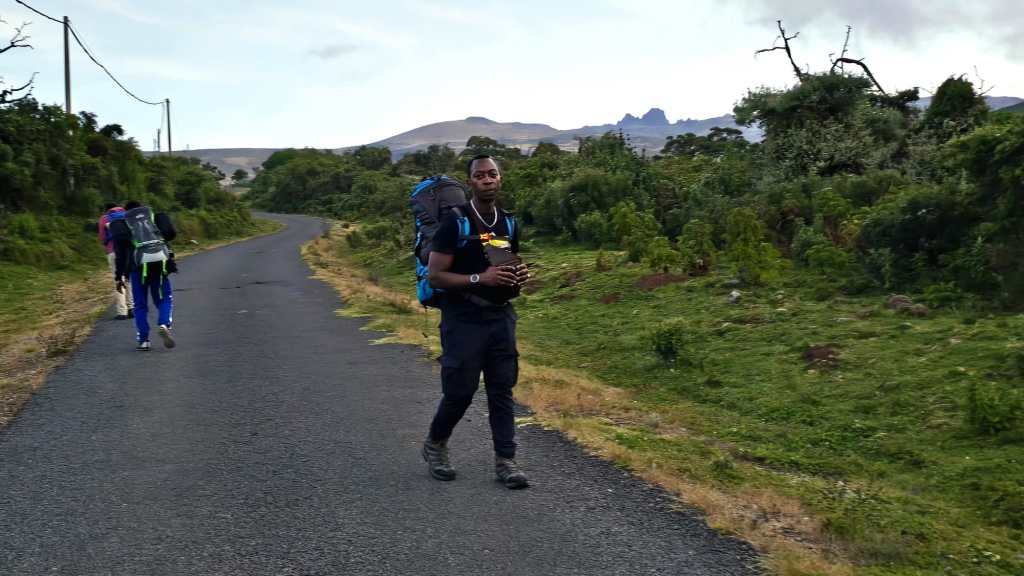
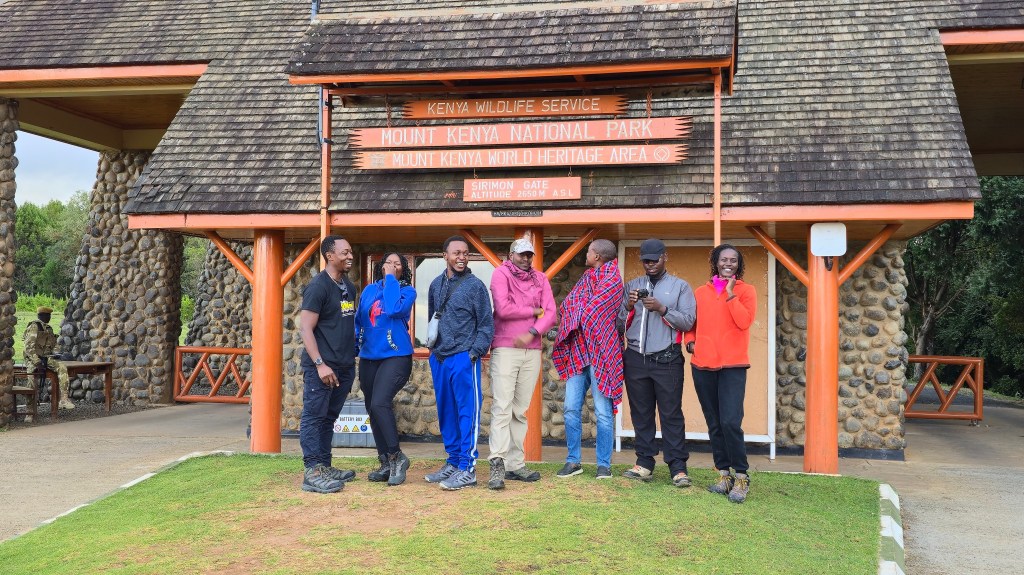
On Friday, December 19th, we traded the chaotic energy of Nairobi for the crisp air of Nanyuki a three hour drive from the city. We arrived at around noon, and over lunch, we met our guide, Wamururu, a tall man in his 60s, possessed of a soft, polite voice that stood in quiet contrast to the rugged landscape he commanded. Wamururu is a living legend in the mountain, known to conquer the climb at least 4 times every month. After briefing us on the itinerary ahead, he audited our ragtag collection of gear and pointed out the essential gaps we needed to fill at the local climbing gear-for-hire shops. By 4:00 PM, we stood at the Mt. Kenya National Park gate, where Wamururu introduced us to the ‘engine’ of our expedition, the real studs: David, his assistant guide, a cook, and seven porters who would be carrying our heavy gear all the way.

The first test was a choice: a 7km drive to the first camp, Old Moses, or a walk with a gradual ascent to acclimatize. True to our ‘unprepared but defiant’ spirit, we chose to walk. My 18-year-old brother, Davy, decided to push the envelope by carrying a 10kg porter bag; not to be outdone by my junior, I shouldered another to the surprise and laughter of the porters, who now had nothing to carry. It was a classic display of the ego—two brothers trying to prove their strength to a mountain that hadn’t even begun to breathe on them yet. The hike to Old Moses Camp was a deceptive paradise. We marvelled at Baboons and the prehistoric grace of the Common Eland, all while keeping a wary eye out for the buffaloes reported on the trail. While Davy and I maintained a steady, motivated pace, the sting of the incline began to settle into our friends’ legs. We reached Old Moses at 5:30 PM, flushed with the triumph of Day One—unaware that the mountain was simply letting us settle in before the real struggle began.

If Day One was a deceptive handshake, the first night at Old Moses was a cold interrogation. As the sun dipped, the temperature didn’t just fall; it plummeted, slicing through the thin nylon of our tents. I quickly realized that my flea-market gear and enthusiasm were no match for the predatory chill of high-altitude night. Sleep was an elusive luxury on the hard ground. Every few hours, the body demanded a trip to the pit latrines—a humbling, pitch-black pilgrimage through the frost to a hole in the ground that smelled of ancient decay and cold reality. There is no ego in a pit latrine at 3,300 meters; there is only the raw, shivering fact of your own biology.

I woke up on Day Two with a neck as stiff as the frozen grass outside and joints that screamed in protest. The ‘bravado’ of carrying my own 10kg bag the day before felt like a distant, foolish memory. At that particular moment, I questioned my life choices. Yet, looking toward the horizon, the motivation remained. We had 17 kilometres of gruelling terrain standing between us and our next stop, Shipton’s Camp. The ‘self-induced suffering’ I had sought in Austria was finally here, and it was demanding to be acknowledged. We packed our bags with trembling hands, knowing that the honeymoon was over—the mountain was about to stop being a backdrop and start being an opponent.

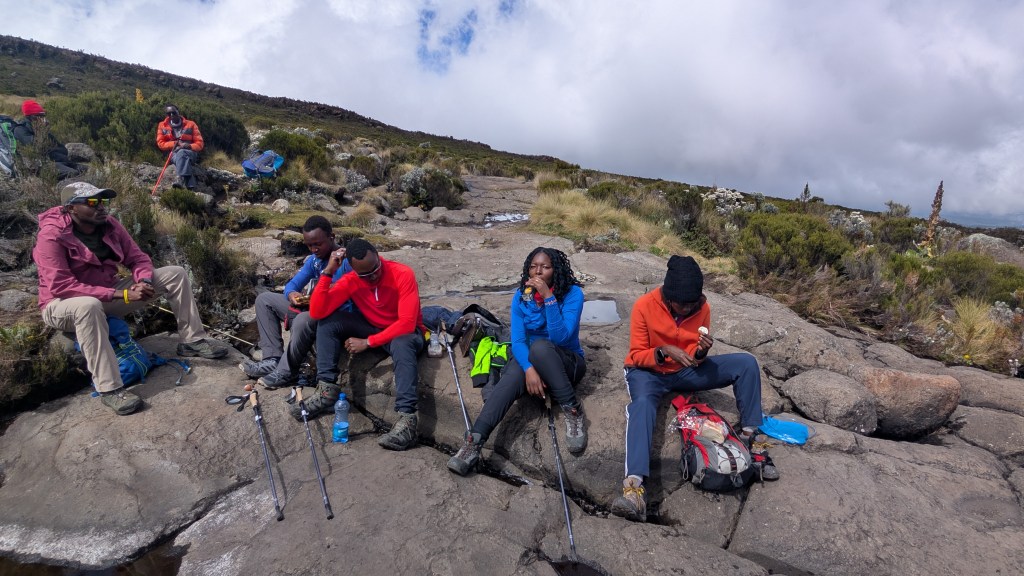
Day Two was a 17-kilometre lesson in humility. The morning started with a deceptive lightness; per the guide’s orders, we carried only our rucksacks with water and sandwiches, leaving the heavy lifting to the porters. For the first few kilometres, our spirits were as high as the Mooreland sun. We laughed, debated, and admired the surreal landscape of Giant Groundsels and Lobelias—plants that looked like they belonged on another planet.

But as the oxygen thinned, the conversation died. Our Bluetooth speaker took over for a while, providing a rhythmic heartbeat to our steps, but eventually, even the music became an intrusion. By the eighth kilometre, there was only the sound of heavy breathing and the rhythmic, soft-spoken command of our guide, Wamururu: ‘Stop. Water break.’

Every ascent began to feel like a death sentence. We would crest a ridge, hoping for a reprieve, only to see another climb stretching toward the horizon. The sight of Point Lenana in the distance, once a beacon of excitement, now felt like a taunt. As altitude sickness and fatigue set in, our ‘team of dreamers’ grew irritable and frayed. Midway through, we sat gasping for air while our porters—carrying our heavy gear on their backs—overtook us with a steady, rhythmic grace, vanishing into the clouds as if the incline didn’t exist. It was a staggering realization of my own fragility.

The final ascent before Shipton’s Camp was the executioner—aptly named Wamururu Hill after our legendary guide. It loomed over us, steep, rocky, and winding toward the heavens as if mocking our fatigue. After 17 kilometres of gruelling terrain, we were completely depleted; our morale had vanished into thin air. It was in this moment of total collapse that I figured: hiring a professional guide was the most valuable investment of this journey.

At the base of this vertical wall, Wamururu, sensing our near-defeat, ordered us to stop. “Rest. Drink water,” he commanded with that soft, authoritative voice. He knew this hill was a spirit-killer. As we sat there gasping, he began to tell us stories—tales of his years on these peaks, of those who made it and those the mountain turned back. He didn’t just give us a break; he gave us perspective. He turned our focus away from our burning lungs and toward the legacy of the climb. When he finally gave the command to get up for the final push, we didn’t rise with physical strength—there was none left—but with a shared, borrowed resolve.

We finally crawled into Shipton’s at 6:00 PM. I collapsed onto the freezing earth and fell into a dead sleep of pure exhaustion, feeling like a weakling compared to the “stud” porters who had already set up camp and were moving with effortless grace, preparing our dinner. I was awakened briefly for dinner, my head throbbing with a mountain-sickness migraine, only to receive the most terrifying news of the trip: we would be woken up at 2:30 AM for the final summit. As I looked up at the dark, looming peak, I couldn’t believe I was expected to start again in just a few hours. I was broken. I looked at my team of dreamers, and the excitement and motivation to summit Kirinyaga in a few hours were gone. I knew we weren’t just climbing for ourselves anymore. We were climbing for the kids at Sifuyo who face their own “Wamururu Hills” every day just to get to a classroom.

The Lesson: Leadership isn’t just about showing the way; it’s about holding the space for others to find their strength when they think they are empty.

Our call for donations is in itself a Wamururu Hill. Help us reach the summit and turn this struggle into a foundation for Sifuyo Primary School: Support the Project

Watch the full video of our hike here

Next in Part 3: The Dark Night of the Soul—The 2:30 AM battle to find the energy that didn’t exist.

ONE FOOT FORWARD: HAPPINESS THROUGH HARDSHIP (PART 1)

Introduction

At 4,000 meters above sea level, the air doesn’t just get thin; it becomes an interrogator. I stood on the slopes of Kirinyaga(native name of Mt. Kenya)—the Place of Brightness— not as a prepared mountaineer, but as a man stripped of his urban pretences by altitude sickness, throbbing headache, exhaustion, and a freezing wind that seemed to mock my lack of preparation. We are taught by modern society that happiness is found in the avoidance of pain, yet there I was, voluntarily shivering in the dark, my lungs gasping for a resource I had always taken for granted. In that state of self-induced suffering, a profound epiphany began to crystallize: the ‘true happiness’ I have been searching for in my writing is NOT found in the comfort of the valley, but in the brutal honesty of the climb. I had to be broken by the mountain to realize that we never ‘conquer’ nature or our history; we simply have to endure long enough for them to reveal our true selves to us. At that point of the climb, hands on my knees, head sunk below my shoulders, gathering whatever sparks of energy left in my tank to make the final push to the summit, I understood that getting to the summit was not the experience but every step I had taken to get there was what mattered. I lifted my pounding head to look up at the barely visible summit, which was but a few hundred metres away, covered by thick clouds and the orange-red rays of the breaking dawn, and I knew that all that counted was to put one foot forward.

The Spark of Defiance (The Valley)

In mid-October 2025, I found myself collapsed on my couch, head in hands, paralyzed by the weight of everything I was carrying: work, school, family, and the sting of failed business ventures. The Austrian winter had arrived early—grey, biting, and mirrored by the moody faces of people in the streets. I felt a profound sense of burnout, a joyless void that even therapy couldn’t quite fill. My therapist’s advice was logical: ‘Slow down; stop chasing too many rabbits.’ But the vigour of life felt out of reach until one late-night binge watching YouTube videos of mountaineers sparked a memory of my best friend, James, summiting Mt. Kenya years ago. In that moment, a lightbulb flickered to life. I didn’t just want to survive the end of a brutal year; I wanted to finish it with a roar. I decided then to climb Mt. Kenya—not just for my own clarity, but for a cause larger than myself: to raise funds to build classrooms and purchase desks for a struggling primary school in my rural village. I had exactly six weeks to prepare for the ascent.

The irony was not lost on me: to heal my mental exhaustion, which felt like depression, contrary to my therapist’s urge to slow down and rest, I chose to pursue a different kind of exhaustion; my spirit demanded a climb. Those six weeks of preparation became a frantic ritual of ‘deconditioning’—unlearning the comfort of my Austrian apartment to embrace the thin, punishing air of Kirinyaga. I was under-prepared, under-trained, and arguably over-ambitious. But as I began the journey toward the mountain, I realized that the desks I wanted to buy for those children were no different from the summit I was seeking. Both required the same thing: the willingness to suffer for something that matters. Those kids at Sifuyo Primary School would walk kilometres every day to go sit on the floor and broken desks to learn and have a chance of a better life in the future. I left the valley of my depression and headed for the peaks, unaware that the mountain was about to break me in ways no therapy ever could.

Preparation was less of a strategy and more of a scramble. Armed only with a Google search and a limited budget, I began hunting for gear in Austrian flea markets and scouring special offers for boots and layers I barely understood. I needed company for the climb, so I invited Dan, my younger brother, to join me. My brother, ever the realist, initially found the plan absurd—how does one summit Africa’s second-highest peak with zero training? Yet, the absurdity proved contagious. Not only did he join, but he recruited our eighteen-year-old brother, David, and two of his friends. A surprise new member of the climb party was my mother’s physiotherapist, who, upon hearing my ‘joke’ about the climb, immediately asked to join the ranks. Suddenly, we were a team of six untrained dreamers. In a final act of defiance coupled with naive frugality, I proposed we save money by going without a guide, but my brother, the realist, would not sign into more absurdity; he insisted on professional help and hired our guide Wamururu and his team—a choice that would eventually prove to be the most valuable investment of the entire journey.

Life Lesson: Happiness isn’t found in the avoidance of pain, but in the willingness to suffer for something that matters.

Join our mission to renovate classrooms and provide desks for Sifuyo Primary School here: Support the Project

Next in Part 2: The Deceptive Handshake—When the mountain stops being a backdrop and starts being an opponent.

The Role of Religion in the Development and Abandonment of African Culture

Africa is allegedly home to the most religious people in the world, with deeply ingrained beliefs, rituals, and customs. Religion is believed to be one of the earliest forms of human culture, predating even agriculture and cities. In his book “Sapiens: A Brief History of Humankind,” Yuval Noah Harari argues that religion played a significant role in the development of human civilization. Religion provided a way for humans to create and maintain shared beliefs and values, fostering cooperation and social cohesion. Additionally, religion gave a sense of meaning and purpose to people’s lives, offering explanations for the natural world and human existence, and providing a sense of order and stability. Furthermore, religion created and reinforced social hierarchies and power structures. Thus, religion played a crucial role in providing a framework for shared beliefs, social cohesion, and meaning-making in human societies throughout history.

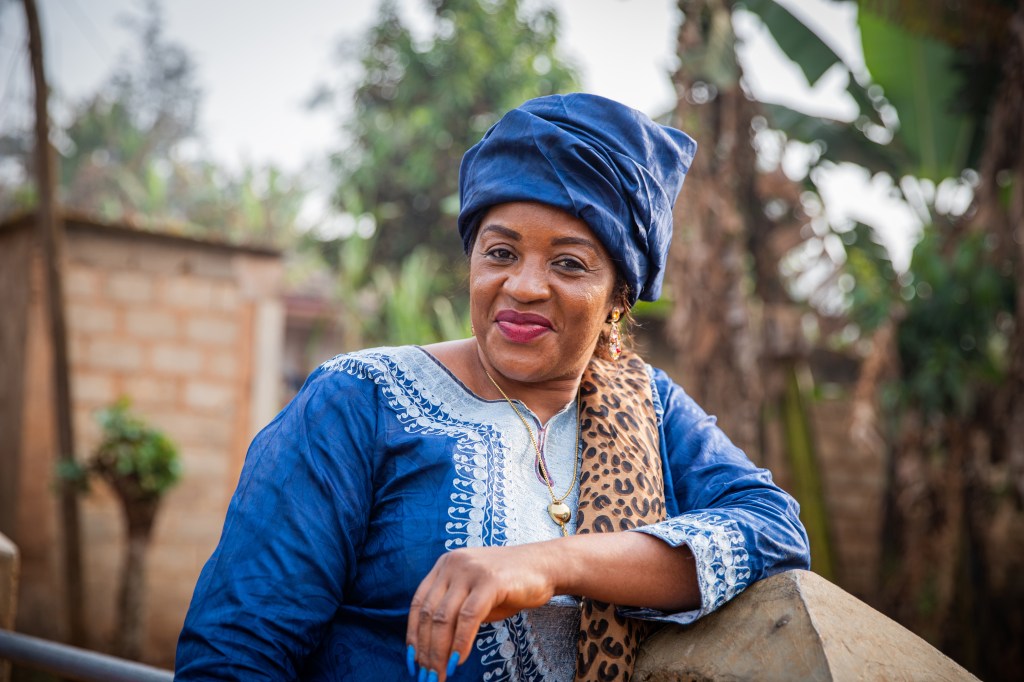
Portrait of an attractive and smiling 50 year old African woman dressed in a traditional African dress

However, what role did religion play in the abandonment of African culture and how did it aid in promoting racism and the inferiority of the black race? During the pre-colonial era, when missionaries arrived in Africa, their mission was to Christianize the black people with the presumption that their ways were primitive and their beliefs heathen. The missionaries believed in the biblical account of Ham, one of the three sons of Noah, who was allegedly black and cursed. This belief, coupled with the popular 19th-century pseudoscience that used dubious scientific methods to prove the superiority of the white race over the black race, led to the justification of slavery, colonization, and Christianization of Africa.

Christianity in itself is neither bad nor racist, nor is religion in general. But it was used as a tool to systematically lead Africans to abandon their cultures and traditions, most of which were good. The indoctrination of the continent has led to the vast majority abandoning the values of hard work and sacrifice for beliefs in prayer and miracles. As a result, there are numerous churches all over Africa where believers flock to and give their last dime to get a miracle.

Religion, in my opinion, did not set Africans free, but rather bound them to belief systems that left them vulnerable to exploitation. Africans quickly forgot that the promised paradise was what they were already living in. Instead of moving at the same pace as the rest of the world in terms of development, they were reduced to ethnic and religious wars as the colonizers looted the natural wealth of the continent.

Should Africa abandon religion? Absolutely not. And replace it with what? Remember that religion was there long before racism and colonialism existed. Belief is the basis of the morals of society. Once beliefs are eradicated, the society starts to decay. The only thinkable solution, in my estimation, would be for everyone to start accepting and appreciating African cultures. People, including Africans, should educate themselves on the deep-rooted beliefs that Blacks are inferior to other races.

Where would you start? Do you really know how ancient African societies lived? Are there practices and customs that would have been helpful for modern society? How can we help Africans use their rich natural resources to develop themselves? Speaking of natural resources, could they be the cause of Africa being the poorest and least developed continent in the world? We will cover the topic of natural resources in the next blog.

“Changing the Narrative: How We Can Overcome the Misconceptions About Africa”

Do you have any knowledge about Africa? As someone born in Kenya, what I now understand as an adult about my country and continent is different from what most Africans have learned in history. There is a saying that history is written by the victors, and in the context of African history, this couldn’t be further from the truth.

After watching Netflix series like “The Queens of Africa” and reading accounts of African history by African historians, I wonder how much we as Africans have been brainwashed. Furthermore, how much has the rest of the world been misled by misconceptions about African people? Could the negativity, racism, discrimination, poverty, illiteracy, and other challenges facing Africa be due to the distorted image of the continent and its people? If so, what is the rationale behind historians distorting the image of Africa?

There are certainly more questions than answers, and Africans are waking up to the reality that we are not being treated fairly on the global stage. It is widely known that dark-skinned people are the most discriminated against in the world. Additionally, the continent with the largest concentration of natural resources is also the poorest and plagued by wars and internal conflict, with a majority of its population living in poverty.

This article is meant to open your eyes to the harsh truths of Africa and Africans and prompt you to become an agent of change to the misconceptions of Africa and Africans in your own way, whether big or small. I do not want to incite hatred or pity for the injustices done to Africans. My goal with this short read is to attempt to change your mindset about your African neighbor, so that our collective feeling towards Africa could instigate long-overdue growth and development of the beautiful continent, breaking the stigma and stereotypes associated with blacks. Finally, I would have achieved my goal when all my readers consider Africans as equals when they sit together at the table and not as 3rd world country citizens seeking a better life in developed countries.

With all that ambition, I am finding it difficult to decide where to start. I will make this part one of a series of blog posts because there is a lot to unpack. Let’s do the unpacking together through a Q&A-style reasoning. I am also interested in your thoughts on this topic.

So, first question: At what point did Africans start to be viewed as uncivilized, primitive people? I would place it in the pre-colonialization era when European explorers discovered a land full of natural resources and labor. They saw this as an opportunity for themselves to enrich their countries and structured a way of keeping Africans uncivilized, uneducated, and poor.

European settlers systematically broke down the pride and self-worth of the locals, indoctrinating them and making them fully dependent on the ways of the West. The kind of education brought to Africa by the colonizers was not meant to serve the interests of the African population but to make Africans idolize the western way of life and view their own as primitive.

Africans had to learn the language of the colonizers, dress like them, and abandon most of what would be considered their identity, leaving them vulnerable to exploitation. Those who resisted faced the wrath of the colonizers’ superior weapons and tactical advantage.

I am not saying that bringing civilization to Africa was wrong, rather how it was brought was wrong. In comparison to China, Russia, and other non-western countries, civilization did not lead to the abandonment of their culture, language, values, and morals. These countries still maintain their identities and cultures despite being civilized.

I had someone ask why all developed countries have their entire educational system in their languages, but in Africa, they have to learn Mathematics, Physics, Biology, Architecture, etc., in colonial languages? Why is it that the Bible has been translated into hundreds of African Languages but there is no Chemical Engineering book in Swahili, Xhosa or Igbo? What is the role that religion has played in the plight of Africans?

Please write in the comments below your thoughts concerning the questions I have asked and stand by to the next blog in this series.

“How to Win at Life: Unlocking the Hidden Lessons of Chess from Strategy and Determination to Self-Discipline and Focus”

Chess is a game that has been enjoyed for centuries by people of all ages and walks of life. It can be seen as a metaphor for life, with the pieces and movements on the board representing different aspects of our own lives. In this blog, we will explore the life lessons and personal development opportunities that can be gained from playing chess.

One important lesson from chess is the value of strategy. To win a game, players must think ahead and plan their moves carefully. This requires strategic thinking and problem-solving skills, which are also essential in life. Whether it’s achieving a personal goal or succeeding in a career, having a clear plan and the ability to think ahead can help you achieve your objectives.

Another valuable lesson from chess is the importance of persistence and determination. Even the best players lose games from time to time, and it’s important to remember that setbacks and failures are a natural part of life. Successful people are those who can keep going even when things don’t go as planned. By learning to persevere and stay determined, you can achieve your goals and overcome obstacles.

Specific strategies and techniques can also be learned from chess. For example, controlling the center of the board is key to dominating the game and putting pressure on your opponent’s pieces. In life, it’s also important to focus on what’s most important and have control over it to set yourself up for success.

In addition, each piece in chess has its own unique characteristics and abilities, which can be seen as representing different personality traits in the context of human society. The hierarchical nature of the game, with the king at the top and the pawns at the bottom, can also be seen as a metaphor for how society is organized.

Original Image created by nightcafe creator.

The king, who is the most powerful piece on the board, represents leadership and authority and is responsible for ensuring the safety of the other pieces. In society, leaders and those in positions of power often possess similar characteristics – they are responsible for guiding and protecting their communities, and must make difficult decisions that can affect the lives of many people.

The queen, which is the second most powerful piece in chess, represents intelligence and the ability to think strategically. The queen can move in any direction and can be a formidable opponent if used effectively. In society, those who are intelligent and able to think creatively and solve problems are often held in high regard and can achieve great things.

The bishops and knights, which are slightly less powerful than the queen, represent adaptability and the ability to navigate complex situations. Bishops can move diagonally across the board, while knights can jump over other pieces, making them highly versatile. In society, those who can adapt and navigate difficult situations are often respected for their problem-solving skills.

Finally, the rooks and pawns, which are the least powerful pieces in chess, represent hard work and the ability to grind out victories. Rooks can move horizontally and vertically across the board, while pawns can only move forward and can only capture pieces that are directly in front of them. In society, those who are willing to put in hard work and persevere through challenges are often able to achieve their goals and succeed.

Finally, chess requires self-discipline and focus. To succeed, players must be able to concentrate and stay focused on the task at hand, even when things get tough. This is a valuable skill in any area of life and can help you reach your full potential.

In conclusion, chess offers many valuable lessons for life and personal development. From the importance of strategy and determination to the value of self-discipline and focus, and the ability to adapt and navigate complex situations, there are countless ways in which the game can help us grow and improve as individuals. Whether you’re a seasoned player or just starting out, there’s always something new to learn and discover.

“Say Goodbye to the Art of Creative Writing: The Imminent Death of Blogging with the Launch of ChatGPT 4”

As the world eagerly awaits the launch of ChatGPT 4, a new and advanced language model developed by OpenAI, many in the blogging community are left wondering about the fate of creative writing. With the ability to generate human-like text with ease, it seems that the art of crafting thoughtful and engaging blog posts may be facing an imminent death.

The truth is, ChatGPT 4 is a game changer. With its advanced capabilities and sophisticated algorithms, it can generate text that is indistinguishable from that written by human writers. This means that bloggers, who have built their careers on the art of creative writing, will soon find themselves competing against a machine that can produce content faster, more efficiently, and with a level of accuracy that is unparalleled.

But it’s not just bloggers who will be impacted. Content creators of all types, from journalists to copywriters, will also find themselves facing increased competition from ChatGPT 4. The future of creative writing as we know it is uncertain, and the ramifications of this technology will be far-reaching.

For bloggers, the question becomes not just how to compete with a machine, but whether it’s even possible. With ChatGPT 4 able to generate text that is indistinguishable from that written by humans, it’s hard to see how bloggers can continue to create unique and engaging content that will attract readers.

Many bloggers have built their careers on the art of creative writing, but with the advent of ChatGPT 4, it seems that this art may soon become obsolete. While the technology has the potential to revolutionize the way we create and consume content, it also has the potential to put many bloggers out of work.

It’s not all doom and gloom, however. There are still ways for bloggers to survive in this new world. One way is to focus on niche topics and areas of expertise that ChatGPT 4 may not be able to replicate. For example, a blogger who specializes in a specific niche, such as travel or fashion, may be able to continue creating unique and engaging content that their readers will continue to enjoy.

Another way for bloggers to survive is to adapt their writing style and focus on creating more personal and emotive content. After all, while ChatGPT 4 may be able to generate text that is indistinguishable from that written by humans, it can’t replicate the human experience. Bloggers who focus on creating content that is personal and emotive, such as diary entries or personal essays, may be able to carve out a niche for themselves in the new world of content creation.

In conclusion, the launch of ChatGPT 4 is undoubtedly a game changer for the world of creative writing. It has the potential to revolutionize the way we create and consume content, but it also has the potential to put many bloggers and content creators out of work. But for those who are willing to adapt, there are still opportunities for survival in this new world. Niche topics and areas of expertise, as well as a focus on personal and emotive content, maybe the key to success in the new era of content creation.

Text and Picture were generated by ChatGP3 and Nightcafe AI respectively.

YOUR MIND IS YOUR KEEPER, NOT YOUR FRIEND. THE FINALE

MAKING YOUR MIND YOUR FRIEND THROUGH NARRATIVE

Happy New Year, my dear readers. One of my new year resolutions is to increase my writings to one blog every week. I also am going to write not only non-fictional but also fiction. So first we finish the series ‘Your mind is your keeper, not your friend’.

My girlfriend once asked me, “What makes us humans different from other species?” After a moment of thought, I answered that humans can think in the abstract. We can create abstract concepts in our minds and bring them to reality. We improve our lives and make things easier by building tools and machines that help us realise our needs. For our psyche, we have Narratives.

We tell kids stories that terrify them from going out in the dark, talking to strangers and teach them lessons on the importance of good morals. Think of the boogeyman, the clever, witty hare, the goose that laid the golden egg, Jack and the beanstalk. These stories are powerful tools to teach us good values and protect kids from getting into trouble.

What separated humans from our cousins, the apes, are the narratives that we started telling ourselves. In every culture, country, and region, legends are passed on from generation to generation. Some tales are so intense that they are taken for actual historical events. People believe them so much they would take offence at any attempt to discredit them.

How did Narratives come to be? In the hunter-gatherer societies, the groups developed rituals like music and dancing to achieve social cohesion among the growing communities. As they settled in larger communities, narratives were adopted to manage pro-social behaviour and alleviate the stresses of living in large communities. This is how religion and nationalism came to be.

 Think of it for a moment; literary everything could be an illusion. Some thinkers suggest that we are characters being played in a simulation by aliens. Most countries with borders never existed until like 200 years ago. Still, the belief and pride in one’s country and their flag symbol is solid and evident from the wars and international competitions.

The power of belief in Narrative is also apparent in sport. Soccer, the most popular game globally, is religiously watched. A lot of resources are placed in a competition where 22 people chase around a ball in a field. This game is famed to transcend political, geographical and economic differences. It is one of the most beautiful, practical Narrative of rituals that unite people of all walks of life.

Most notably, though, is the Narrative that goes on in your mind. Look, no one chooses the Narrative they were born into. You did not choose the Narrative that males should behave in a particular way and females in another. You did not choose the Narrative of your IQ, education level, origins and physical attributes. That these, automatically determine whether the cards you draw in the game of life are good or unlucky ones. You did not choose to accept the Narrative that you have to be quiet and submissive to authority whether they are right or wrong. But many people suffer silently because they have been intimidated by narratives into self-censorship.

DON’T underestimate the power of narratives. Your mind sticks to a narrative even when it no longer suits your needs and desires. Remember the massacre in the 18th century by the Christian crusaders? It was a belief in the Narrative they were doing the Lord’s will. Remember the Gulags of Stalin and the famine that led to the millions who died. It was belief in the Narrative of Marxism. Have you heard of the dictatorship of Kim Jong Un in North Korea, that the people are not revolting out of their belief that their saviour is Kim? It is a narrative that has brewed fear and helplessness.

There are many narratives, some become obsolete with time, and some stand the test of time. For example, the teachings of Jesus in the sermon on the mount, life would be perfect if people followed that Narrative.

You need to keep evaluating your Narrative and updating it to have peace of mind and peace FROM mind. Look, after Hitler was defeated in the second world war, the Germans had to change the Narrative of how they viewed people from other races. Now Germany is one of the most diverse countries to live in.

Do your religious beliefs, cultural values, and personal truths make you happy? Does your ideology lead you to be tolerant and respectful to people with different narratives? Does your story challenge you to become the best version of yourself?

When reading about the concentration camps in Nazi Germany and Stalin’s USSR, it is human nature to identify and empathise with the victims. Aleksandr Solzhenitsyn, who wrote ‘The Gulag Archipelago’, suggested that we should also put ourselves in the shoes of the oppressor. That guard at the concentration camp, what Narrative was he telling himself as he watched people die a miserable death? The woman who snitched on her Jewish neighbour and his family and had them taken to the camps. What Narrative was going on in her mind?

Africa, where I was born and raised, what sort of Narrative are they holding on to so that they have to be dependent on foreign aid yet have mineral-rich and fertile lands as well as the youngest population of the world. How strong is that Narrative that most Africans in every election cycle for decades elect corrupt officials who care less about their own people but plunder their resources?

Think, my friend, maybe the story you have been holding on to is holding you back. Your beautiful mind can be your friend if it uses its unique neuroplasticity ability (adapting new narratives). Take up a better Narrative for yourself or upgrade the one you have. Make your mind your friend and your keeper.

Your Mind is your keeper, not your friend Part 3

Making your Mind your friend through Gratitude.

Gratitude is a very portent practice in bringing joy and well-being into life. The personal development sector is awash with numerous articles on why and how to use Gratitude as a practice to bring happiness, positivity and success into your life.

There are many ways of practising Gratitude. The most common is thinking of stuff you are grateful for, writing them down every day, and reflecting on them. I have tried that for some time, and it has had little effect on me. Waking up every day and thinking of what I am grateful for has given me an excellent start to the day. But that lasted only a couple of hours. After a week of doing that, I found myself scratching my head to find new stuff that I can be grateful for so that I am not constantly repeating myself. Sooner or later, I quit the practice altogether because I was no longer getting the desired effect.

Then I heard a podcast by Andrew Hubermann https://youtu.be/KVjfFN89qvQ. He explained where most people, including myself, get it wrong with the Gratitude practice. In this blog entry, I will not water down Dr Hubermann’s work by attempting to summarise it. So I urge you, dear reader, after reading my blog, go listen to it. It will definitely positively change the way you practice Gratitude.

My previous gratitude practice didn’t work because, at some point, the emotional connection was cut off between what I am grateful for and how I am feeling at that moment. Dr Hubermann explains: “you can’t fool your mind”, if the moment is crapy, it is crapy.

Now, the better gratitude practice entails remembering a moment where you genuinely received Gratitude from someone after you are done doing them a good did. Closing your eyes and visualising this moment has a tremendous impact on producing happy hormones. Studies have shown that the brain activity in Raphe Nucleus, which makes the happy hormone serotonin, is triggered by this practice of Gratitude.

It goes dipper when you hear of a story of how someone helped out another and was genuinely appreciated; as a result, the same part of the brain is also activated. That is why bible stories of Jesus are so powerful. Because they show how a compassionate man helped out needy fellows.

I decided to try out the practice as suggested by Dr Hubermann. So, my day job is driving the Tram. As I cruised one day, I tried to remember how I helped someone and they were genuinely grateful. I remembered how I approached a station some time ago and saw a phone lying on the ground. I stopped the Tram, came out and picked the phone from the ground. Then, after a while, the phone rang, and I answered to a distressed woman’s call who was thanking me so much for finding her daughter’s phone. I handed it back to her at my break and kindly declined a 10 euro reward from her. She was so grateful and wished me God’s blessings.

I smiled to myself, enjoying the sudden surge of serotonin in my system. But what happened next, I was not prepared for. At that very station, someone interrupted my bliss trip with a knock in my cabinet. He said he found a phone lying on the chair; someone must have dropped it and asked if I would be so kind as to give the owner if they called. How weird was that? I gladly accepted and thanked the man for his honesty and wished him a pleasant day.

The owner of the phone called and said he could not pick up the phone as he is a nurse at a hospital. I offered to bring it to him during my long break. He was delighted and tried to give me a 20 euro reward, which I again declined. I went back to work feeling so happy.

If you think that is the end of it all, you are not yet ready for this. Later that day, as I was doing the final round with the Tram, I went around checking for any lost and found items. I indeed found a green shopping bag. I took it with me to my driver’s cabin. I inspected to see if there were any valuables or contacts for the owner. I saw a purse and printouts with a name and address. In the purse were bills of an estimated 10,000 euros. As I debated in my mind whether to take the shopping bag to the police or deliver it personally to the owner, again, someone knocked at my driver’s cabin. It was a distressed old man. He asked if I had found a green shopping bag. I asked him for a name to confirm that it belonged to him. He gave his daughter’s correct names on the documents and explained that he was supposed to take the items to her, and he had feared he had completely lost them.

Having those experiences on the same days is entirely mind-blowing. Whenever I think of those experiences, I feel so happy about my honesty and how I saved that old man from the stress of explaining how he lost his daughter’s belongings. How did you feel when you read the joy the nurse had upon receiving his phone and the relief the old man had when he got his green bag back? A narrative is a powerful tool in triggering the right parts of our brain in response to a gratitude practice.

Next time tell a story about something good you did to someone and experience the surge of happiness as you recall the incident.

Your mind is your Keeper, not your friend. Part 2

Your Mind

There are times when we have thoughts that we have not voluntarily actively participated in. There are thoughts that randomly pop into your mind sometimes living you aghast and questioning your own sanity.

There are two parts of our brain. The limbic small primate older part is responsible for the cocktail of hormones that causes us to have a range of moods and emotions. Then there is the cortex the large evolutionary part where thoughts originate from.

One scientist described the cortex as a supercomputer whose sole purpose is doing what a monkey brain wants. In essence, the limbic brain is the boss and how you feel dictates the thoughts you will have. Makes sense? Let’s think of an example.

You have decided to go for a run after a short distance you feel tired. What goes on in your mind? You are flooded with suggestions on how the situation should be handled. Stop and walk back home, grab a taxi, sit down for a while then decide whether you want to continue or not, slow down run at a walking pace for just 100 meters then go home, you will do it next time. The cortex was basically trying to make you feel better by suggesting that you quit on your plan to do your 5k run.

Does this not happen all the time you are on to something challenging? My big one is talking to strangers. I generally love people but am a little shy. I would rather write a text or an email than make a phone call or meet someone in person. Whenever I need to call someone or just ask for help from a total stranger a crisis meeting is quickly convened in my head and very concrete arguments are presented on why I should not approach this stranger. Every time I went against those limiting thoughts it proved that my mind was just trying to protect me by keeping in my comfort zone. The cortex was just doing its job of making sure the stress hormones the limbic was releasing are contained.

 The cortex is sceptical and analytical and the limbic languishes in emotions. That’s why when one is under the influence of drugs or alcohol their base emotions are more visible. Because psychotics shut down or slow down the cortex. One expert recommended a shot of whiskey for participants before any tough negotiations started. He argues that this will ease the tension in the room and open up channels of communication.

It also explains why when one is high, they don’t think about their bills, their annoying bosses or their hateful neighbour. The part of the brain which does the worry was sent on a short leave. I am not recommending the use of drugs and alcohol to feel good. They might make you feel good but it is very short-lived and then the watchdog will be back and hammer you with regrets.

How do you use the two parts of your brain to ensure that you have an optimal life? The cortex will definitely prevent you from jumping over a cliff. So a lot of times it is good to take the crisis meetings seriously especially when indulging yourself. The limbic will infuse in your veins the feel-good hormones and you will radiate joy and positivity.

You need to decide when to override your cortex thoughts and when the lust for happy hormones will get you in trouble and therefore delayed gratification is probably a better idea. Finally whenever you find yourself in a situation where you don’t want to be or you fail or are disappointed by your own actions. Don’t allow your cortex to beat you up with guilt and understand that you are not your thoughts and your mind is not your friend it is your keeper.