ONE FOOT FORWARD: HAPPINESS THROUGH HARDSHIP (PART 3)

The Dark Night of the Soul at 4,985 Meters

“Good morning!”

Wamururu, our guide’s voice sliced through the frozen silence of Shipton’s Camp at 2:30 AM. It was a polite irony; there was nothing ‘good’ about a morning that began in a sub-zero tent with a skull-splitting migraine. Despite sleeping fully dressed in winter jackets, gloves, and sleeping bags, the biting cold had seeped into our bones. The painkillers I had taken earlier were useless—a raindrop in an ocean of physical protest.

When I asked Wamururu for altitude sickness medication, he looked at me with the calm eyes of a man who has seen a thousand egos break. He declined. “I can’t risk the side effects during the final ascent,” he said softly.

In that moment, the voice of the “Valley Self”—the one that seeks comfort and avoids friction—began its cunning manipulation. ‘You are sick,’ my mind argued. ‘No one expects a sick man to climb a mountain. Just go back to the tent. They will all understand.’ But as I looked at my team, I realized that my surrender would be their permission to fail. I tapped into a reserve of energy I didn’t know I possessed: I wasn’t there to be comfortable; I was there to see who I was when the comfort was gone.

The Mercy of the Dark

We began the final push in total darkness. I later realized that starting at 2:30 AM is a psychological mercy; if we could see the sheer verticality of what we were about to undertake, we would have been too dejected to start. We moved in a world that only existed in the three-foot radius of our headlamps.
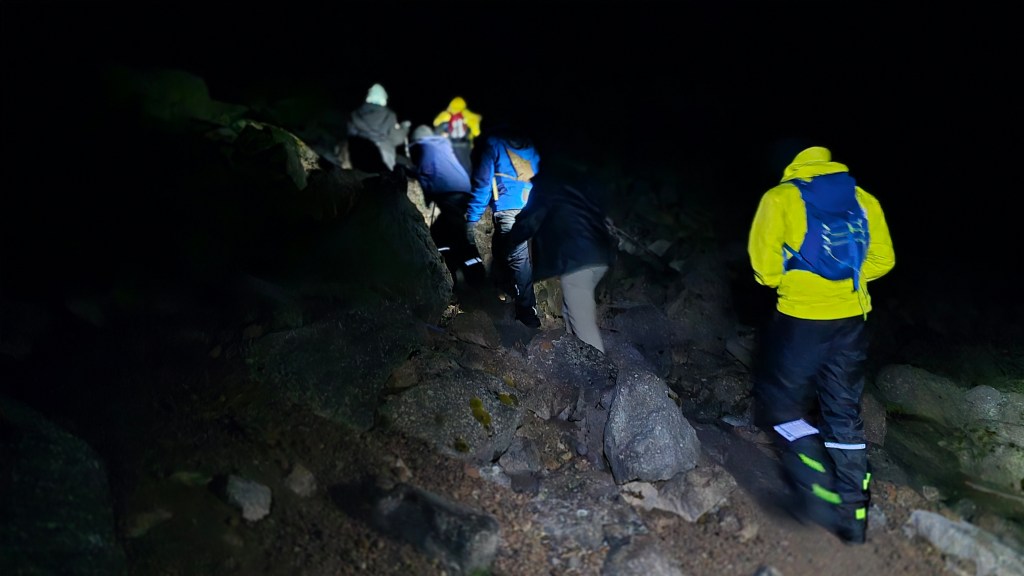
My youngest brother, David, was completely overwhelmed. The altitude was a thief, stealing his breath and his resolve. For a moment, it looked like he wouldn’t make it. The guides considered leaving him to descend, but the whole team rallied behind him. We became a single pulse—pushing him, encouraging him, refusing to let the mountain claim his spirit. We weren’t just a group of “untrained dreamers” anymore; we were a tribe.

Nature’s Twisted Humor

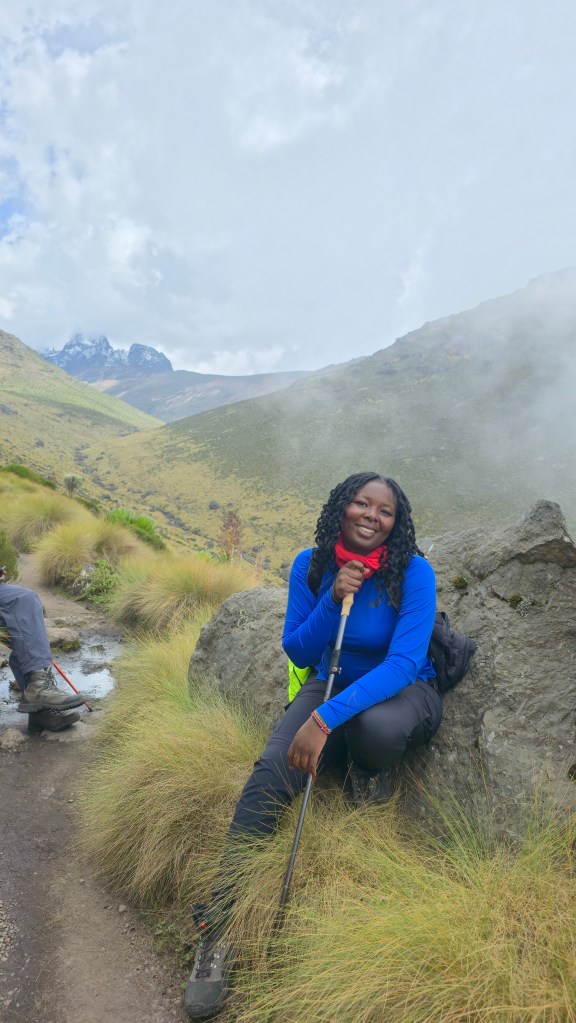
One foot forward we pushed, each step a tiny victory. I lifted my pounding head to look up at the barely visible summit, which was but a few hundred metres away, covered by thick clouds and the orange-red rays of the breaking dawn, and I knew that all that counted was to just put one foot forward. We finally stood at the summit of Point Lenana, nature greeted us with a twisted sense of humor. We expected a magnificent view of the Sunrise in the horizon and to celebrate at the summit the conquest of what seemed impossible and crazy. There was no serene sunrise or a golden glow. Instead, we were met with gushing winds, freezing snow, and a chill that threatened to turn our blood to ice. We couldn’t soak in the marvels or even take the “perfect” photos. The mountain allowed us a few fleeting minutes of triumph before demanding our immediate descent.
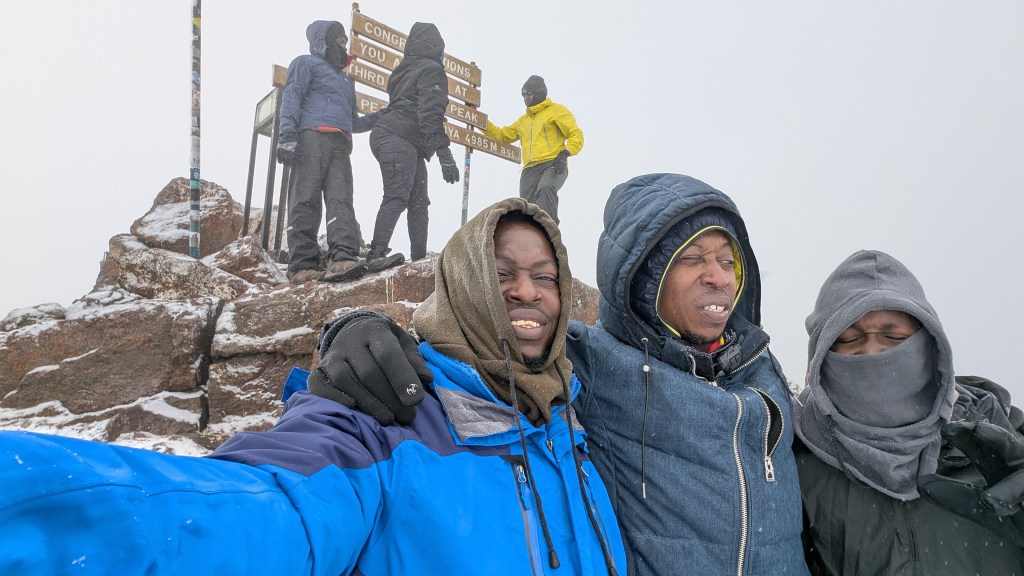
It was in those freezing, breathless moments that the true epiphanies of my quest for happiness finally crystallized:

Epiphanies from the Peak: What the Mountain Taught Me

  • The Sanctity of Friction: Most people spend their lives walking away from pain. I spent three days walking directly into it. Meaning is the byproduct of friction; the suffering is what “sanctified” the experience.
  • The Death of the Valley Mask: Exhaustion is the ultimate truth-teller. At 4,000 meters, I had to abandon my “city ego.” The mountain doesn’t care about your prayers or your status; it only responds to your pulse and determination.
  • Kirinyaga is a History Book, Not a Tourist Trap: We have viewed our landmarks through a colonial lens for too long. Standing on the throne of my ancestors with burning lungs felt like a pilgrimage of decolonizing my own body.
  • The Philosophy of the Next Step: When the summit feels like a death sentence, you focus on the next step. Endurance isn’t about strength; it’s about the refusal to stop moving.
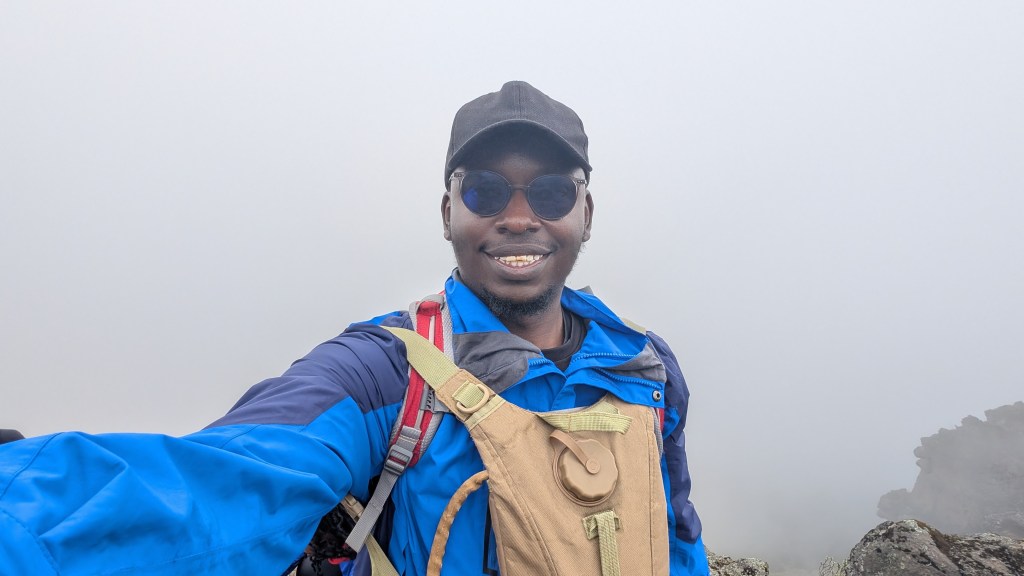
Dan Sigi: “I emptied every single ounce of energy within me. I walked until my legs felt like jelly, and at that point, the only thing I could do was keep moving forward. That’s when true grit—the very essence of the cause—took over. Your mind starts to access that hidden reservoir of energy, affirming that your goal is actually within grasp.”
Beldina Nyatichi: “The climb taught me patience and how the greatest progress comes from small, steady steps. Standing at the summit changed how I see challenges in life: I now approach them with calm and confidence, knowing that persistence, even when uncomfortable, always leads to growth. Nothing is going to stop me from making it in life now.”

I descended Kirinyaga a different man than the one who sat miserably on a couch in Austria. The “failed” businesses and the burnout hadn’t disappeared, but they had shrunk in the shadow of the mountain. I realized that true happiness isn’t the absence of struggle, but the presence of a struggle that matters.

I set out to raise funds for Sifuyo Primary School, thinking I was doing it to help the children. In reality, the mission was what carried me to the top. We are building those classrooms not just with bricks, but with the same “stubborn biology” that got us to the peak.

I am not done yet. This was the first of many challenges I will undertake for this cause. If you are currently sitting in the “comfort” of your own valley, I ask you: What is the mountain you are avoiding?

Join the Climb: Turning Pain into Progress

I reached the summit to ensure that the children in my rural village don’t have to “climb mountains” just to get a basic education. Every desk we buy and every classroom we renovate is another “six inches” toward their future.

We have conquered the peak; now, let’s build the foundation. Join me in adventures that will not only fortify your mind but also support development projects for the needy.

Let’s prove that when we climb together, no summit is out of reach.

ONE FOOT FORWARD: HAPPINESS THROUGH HARDSHIP (PART 2)

The Deceptive Handshake—When the mountain stops being a backdrop and starts being an opponent.

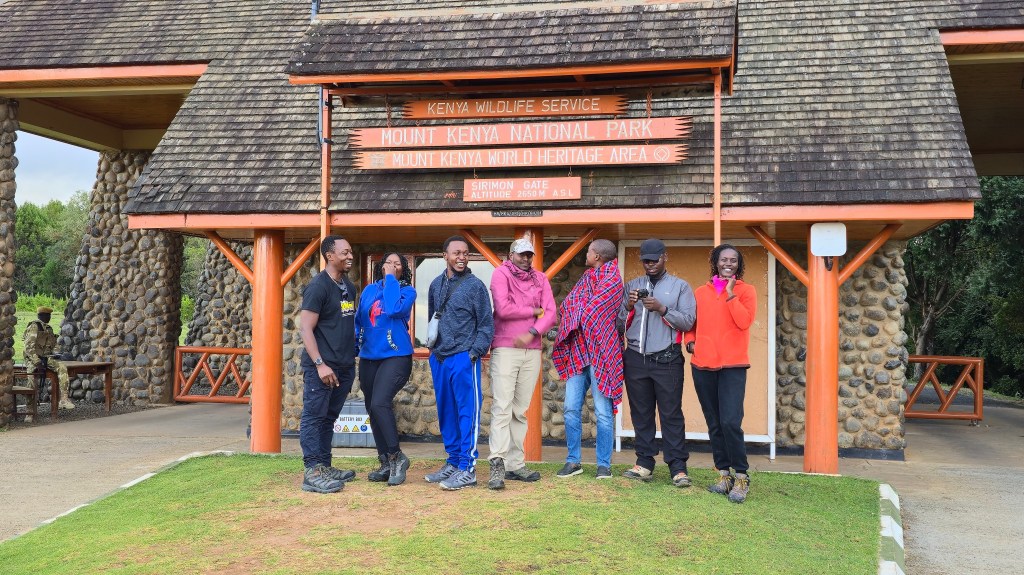
On Friday, December 19th, we traded the chaotic energy of Nairobi for the crisp air of Nanyuki a three hour drive from the city. We arrived at around noon, and over lunch, we met our guide, Wamururu, a tall man in his 60s, possessed of a soft, polite voice that stood in quiet contrast to the rugged landscape he commanded. Wamururu is a living legend in the mountain, known to conquer the climb at least 4 times every month. After briefing us on the itinerary ahead, he audited our ragtag collection of gear and pointed out the essential gaps we needed to fill at the local climbing gear-for-hire shops. By 4:00 PM, we stood at the Mt. Kenya National Park gate, where Wamururu introduced us to the ‘engine’ of our expedition, the real studs: David, his assistant guide, a cook, and seven porters who would be carrying our heavy gear all the way.

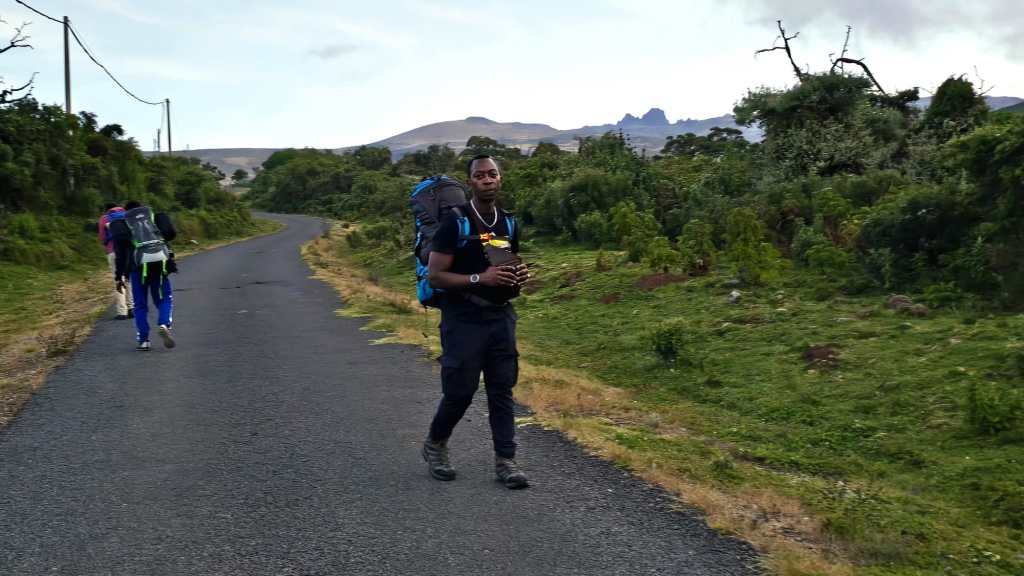
The first test was a choice: a 7km drive to the first camp, Old Moses, or a walk with a gradual ascent to acclimatize. True to our ‘unprepared but defiant’ spirit, we chose to walk. My 18-year-old brother, Davy, decided to push the envelope by carrying a 10kg porter bag; not to be outdone by my junior, I shouldered another to the surprise and laughter of the porters, who now had nothing to carry. It was a classic display of the ego—two brothers trying to prove their strength to a mountain that hadn’t even begun to breathe on them yet. The hike to Old Moses Camp was a deceptive paradise. We marvelled at Baboons and the prehistoric grace of the Common Eland, all while keeping a wary eye out for the buffaloes reported on the trail. While Davy and I maintained a steady, motivated pace, the sting of the incline began to settle into our friends’ legs. We reached Old Moses at 5:30 PM, flushed with the triumph of Day One—unaware that the mountain was simply letting us settle in before the real struggle began.

If Day One was a deceptive handshake, the first night at Old Moses was a cold interrogation. As the sun dipped, the temperature didn’t just fall; it plummeted, slicing through the thin nylon of our tents. I quickly realized that my flea-market gear and enthusiasm were no match for the predatory chill of high-altitude night. Sleep was an elusive luxury on the hard ground. Every few hours, the body demanded a trip to the pit latrines—a humbling, pitch-black pilgrimage through the frost to a hole in the ground that smelled of ancient decay and cold reality. There is no ego in a pit latrine at 3,300 meters; there is only the raw, shivering fact of your own biology.

I woke up on Day Two with a neck as stiff as the frozen grass outside and joints that screamed in protest. The ‘bravado’ of carrying my own 10kg bag the day before felt like a distant, foolish memory. At that particular moment, I questioned my life choices. Yet, looking toward the horizon, the motivation remained. We had 17 kilometres of gruelling terrain standing between us and our next stop, Shipton’s Camp. The ‘self-induced suffering’ I had sought in Austria was finally here, and it was demanding to be acknowledged. We packed our bags with trembling hands, knowing that the honeymoon was over—the mountain was about to stop being a backdrop and start being an opponent.

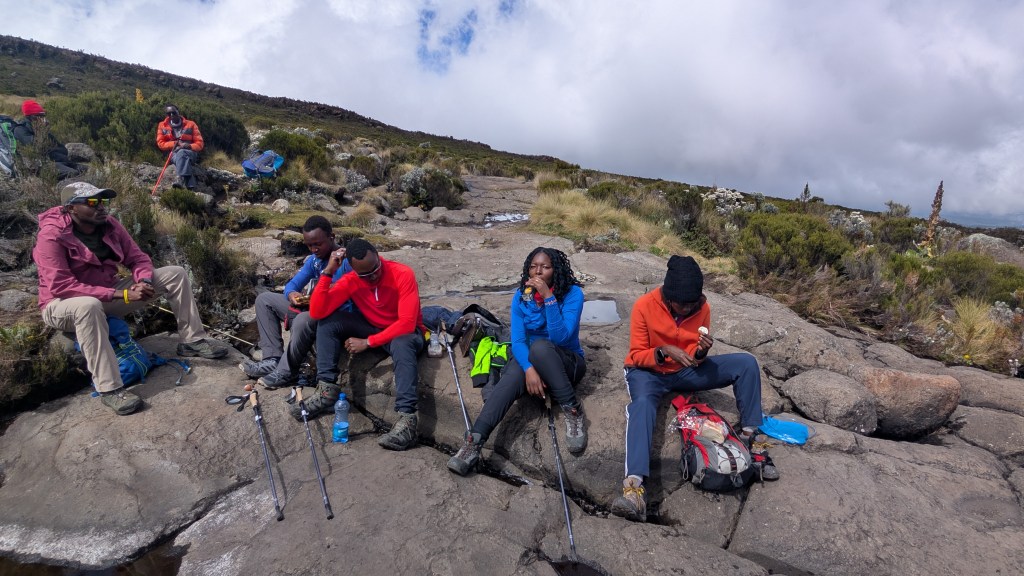
Day Two was a 17-kilometre lesson in humility. The morning started with a deceptive lightness; per the guide’s orders, we carried only our rucksacks with water and sandwiches, leaving the heavy lifting to the porters. For the first few kilometres, our spirits were as high as the Mooreland sun. We laughed, debated, and admired the surreal landscape of Giant Groundsels and Lobelias—plants that looked like they belonged on another planet.

But as the oxygen thinned, the conversation died. Our Bluetooth speaker took over for a while, providing a rhythmic heartbeat to our steps, but eventually, even the music became an intrusion. By the eighth kilometre, there was only the sound of heavy breathing and the rhythmic, soft-spoken command of our guide, Wamururu: ‘Stop. Water break.’

Every ascent began to feel like a death sentence. We would crest a ridge, hoping for a reprieve, only to see another climb stretching toward the horizon. The sight of Point Lenana in the distance, once a beacon of excitement, now felt like a taunt. As altitude sickness and fatigue set in, our ‘team of dreamers’ grew irritable and frayed. Midway through, we sat gasping for air while our porters—carrying our heavy gear on their backs—overtook us with a steady, rhythmic grace, vanishing into the clouds as if the incline didn’t exist. It was a staggering realization of my own fragility.

The final ascent before Shipton’s Camp was the executioner—aptly named Wamururu Hill after our legendary guide. It loomed over us, steep, rocky, and winding toward the heavens as if mocking our fatigue. After 17 kilometres of gruelling terrain, we were completely depleted; our morale had vanished into thin air. It was in this moment of total collapse that I figured: hiring a professional guide was the most valuable investment of this journey.

At the base of this vertical wall, Wamururu, sensing our near-defeat, ordered us to stop. “Rest. Drink water,” he commanded with that soft, authoritative voice. He knew this hill was a spirit-killer. As we sat there gasping, he began to tell us stories—tales of his years on these peaks, of those who made it and those the mountain turned back. He didn’t just give us a break; he gave us perspective. He turned our focus away from our burning lungs and toward the legacy of the climb. When he finally gave the command to get up for the final push, we didn’t rise with physical strength—there was none left—but with a shared, borrowed resolve.

We finally crawled into Shipton’s at 6:00 PM. I collapsed onto the freezing earth and fell into a dead sleep of pure exhaustion, feeling like a weakling compared to the “stud” porters who had already set up camp and were moving with effortless grace, preparing our dinner. I was awakened briefly for dinner, my head throbbing with a mountain-sickness migraine, only to receive the most terrifying news of the trip: we would be woken up at 2:30 AM for the final summit. As I looked up at the dark, looming peak, I couldn’t believe I was expected to start again in just a few hours. I was broken. I looked at my team of dreamers, and the excitement and motivation to summit Kirinyaga in a few hours were gone. I knew we weren’t just climbing for ourselves anymore. We were climbing for the kids at Sifuyo who face their own “Wamururu Hills” every day just to get to a classroom.

The Lesson: Leadership isn’t just about showing the way; it’s about holding the space for others to find their strength when they think they are empty.

Our call for donations is in itself a Wamururu Hill. Help us reach the summit and turn this struggle into a foundation for Sifuyo Primary School: Support the Project

Watch the full video of our hike here

Next in Part 3: The Dark Night of the Soul—The 2:30 AM battle to find the energy that didn’t exist.

ONE FOOT FORWARD: HAPPINESS THROUGH HARDSHIP (PART 1)

Introduction

At 4,000 meters above sea level, the air doesn’t just get thin; it becomes an interrogator. I stood on the slopes of Kirinyaga(native name of Mt. Kenya)—the Place of Brightness— not as a prepared mountaineer, but as a man stripped of his urban pretences by altitude sickness, throbbing headache, exhaustion, and a freezing wind that seemed to mock my lack of preparation. We are taught by modern society that happiness is found in the avoidance of pain, yet there I was, voluntarily shivering in the dark, my lungs gasping for a resource I had always taken for granted. In that state of self-induced suffering, a profound epiphany began to crystallize: the ‘true happiness’ I have been searching for in my writing is NOT found in the comfort of the valley, but in the brutal honesty of the climb. I had to be broken by the mountain to realize that we never ‘conquer’ nature or our history; we simply have to endure long enough for them to reveal our true selves to us. At that point of the climb, hands on my knees, head sunk below my shoulders, gathering whatever sparks of energy left in my tank to make the final push to the summit, I understood that getting to the summit was not the experience but every step I had taken to get there was what mattered. I lifted my pounding head to look up at the barely visible summit, which was but a few hundred metres away, covered by thick clouds and the orange-red rays of the breaking dawn, and I knew that all that counted was to put one foot forward.

The Spark of Defiance (The Valley)

In mid-October 2025, I found myself collapsed on my couch, head in hands, paralyzed by the weight of everything I was carrying: work, school, family, and the sting of failed business ventures. The Austrian winter had arrived early—grey, biting, and mirrored by the moody faces of people in the streets. I felt a profound sense of burnout, a joyless void that even therapy couldn’t quite fill. My therapist’s advice was logical: ‘Slow down; stop chasing too many rabbits.’ But the vigour of life felt out of reach until one late-night binge watching YouTube videos of mountaineers sparked a memory of my best friend, James, summiting Mt. Kenya years ago. In that moment, a lightbulb flickered to life. I didn’t just want to survive the end of a brutal year; I wanted to finish it with a roar. I decided then to climb Mt. Kenya—not just for my own clarity, but for a cause larger than myself: to raise funds to build classrooms and purchase desks for a struggling primary school in my rural village. I had exactly six weeks to prepare for the ascent.

The irony was not lost on me: to heal my mental exhaustion, which felt like depression, contrary to my therapist’s urge to slow down and rest, I chose to pursue a different kind of exhaustion; my spirit demanded a climb. Those six weeks of preparation became a frantic ritual of ‘deconditioning’—unlearning the comfort of my Austrian apartment to embrace the thin, punishing air of Kirinyaga. I was under-prepared, under-trained, and arguably over-ambitious. But as I began the journey toward the mountain, I realized that the desks I wanted to buy for those children were no different from the summit I was seeking. Both required the same thing: the willingness to suffer for something that matters. Those kids at Sifuyo Primary School would walk kilometres every day to go sit on the floor and broken desks to learn and have a chance of a better life in the future. I left the valley of my depression and headed for the peaks, unaware that the mountain was about to break me in ways no therapy ever could.

Preparation was less of a strategy and more of a scramble. Armed only with a Google search and a limited budget, I began hunting for gear in Austrian flea markets and scouring special offers for boots and layers I barely understood. I needed company for the climb, so I invited Dan, my younger brother, to join me. My brother, ever the realist, initially found the plan absurd—how does one summit Africa’s second-highest peak with zero training? Yet, the absurdity proved contagious. Not only did he join, but he recruited our eighteen-year-old brother, David, and two of his friends. A surprise new member of the climb party was my mother’s physiotherapist, who, upon hearing my ‘joke’ about the climb, immediately asked to join the ranks. Suddenly, we were a team of six untrained dreamers. In a final act of defiance coupled with naive frugality, I proposed we save money by going without a guide, but my brother, the realist, would not sign into more absurdity; he insisted on professional help and hired our guide Wamururu and his team—a choice that would eventually prove to be the most valuable investment of the entire journey.

Life Lesson: Happiness isn’t found in the avoidance of pain, but in the willingness to suffer for something that matters.

Join our mission to renovate classrooms and provide desks for Sifuyo Primary School here: Support the Project

Next in Part 2: The Deceptive Handshake—When the mountain stops being a backdrop and starts being an opponent.