Your Mind is your keeper, not your friend Part 3

Making your Mind your friend through Gratitude.

Gratitude is a very portent practice in bringing joy and well-being into life. The personal development sector is awash with numerous articles on why and how to use Gratitude as a practice to bring happiness, positivity and success into your life.

There are many ways of practising Gratitude. The most common is thinking of stuff you are grateful for, writing them down every day, and reflecting on them. I have tried that for some time, and it has had little effect on me. Waking up every day and thinking of what I am grateful for has given me an excellent start to the day. But that lasted only a couple of hours. After a week of doing that, I found myself scratching my head to find new stuff that I can be grateful for so that I am not constantly repeating myself. Sooner or later, I quit the practice altogether because I was no longer getting the desired effect.

Then I heard a podcast by Andrew Hubermann https://youtu.be/KVjfFN89qvQ. He explained where most people, including myself, get it wrong with the Gratitude practice. In this blog entry, I will not water down Dr Hubermann’s work by attempting to summarise it. So I urge you, dear reader, after reading my blog, go listen to it. It will definitely positively change the way you practice Gratitude.

My previous gratitude practice didn’t work because, at some point, the emotional connection was cut off between what I am grateful for and how I am feeling at that moment. Dr Hubermann explains: “you can’t fool your mind”, if the moment is crapy, it is crapy.

Now, the better gratitude practice entails remembering a moment where you genuinely received Gratitude from someone after you are done doing them a good did. Closing your eyes and visualising this moment has a tremendous impact on producing happy hormones. Studies have shown that the brain activity in Raphe Nucleus, which makes the happy hormone serotonin, is triggered by this practice of Gratitude.

It goes dipper when you hear of a story of how someone helped out another and was genuinely appreciated; as a result, the same part of the brain is also activated. That is why bible stories of Jesus are so powerful. Because they show how a compassionate man helped out needy fellows.

I decided to try out the practice as suggested by Dr Hubermann. So, my day job is driving the Tram. As I cruised one day, I tried to remember how I helped someone and they were genuinely grateful. I remembered how I approached a station some time ago and saw a phone lying on the ground. I stopped the Tram, came out and picked the phone from the ground. Then, after a while, the phone rang, and I answered to a distressed woman’s call who was thanking me so much for finding her daughter’s phone. I handed it back to her at my break and kindly declined a 10 euro reward from her. She was so grateful and wished me God’s blessings.

I smiled to myself, enjoying the sudden surge of serotonin in my system. But what happened next, I was not prepared for. At that very station, someone interrupted my bliss trip with a knock in my cabinet. He said he found a phone lying on the chair; someone must have dropped it and asked if I would be so kind as to give the owner if they called. How weird was that? I gladly accepted and thanked the man for his honesty and wished him a pleasant day.

The owner of the phone called and said he could not pick up the phone as he is a nurse at a hospital. I offered to bring it to him during my long break. He was delighted and tried to give me a 20 euro reward, which I again declined. I went back to work feeling so happy.

If you think that is the end of it all, you are not yet ready for this. Later that day, as I was doing the final round with the Tram, I went around checking for any lost and found items. I indeed found a green shopping bag. I took it with me to my driver’s cabin. I inspected to see if there were any valuables or contacts for the owner. I saw a purse and printouts with a name and address. In the purse were bills of an estimated 10,000 euros. As I debated in my mind whether to take the shopping bag to the police or deliver it personally to the owner, again, someone knocked at my driver’s cabin. It was a distressed old man. He asked if I had found a green shopping bag. I asked him for a name to confirm that it belonged to him. He gave his daughter’s correct names on the documents and explained that he was supposed to take the items to her, and he had feared he had completely lost them.
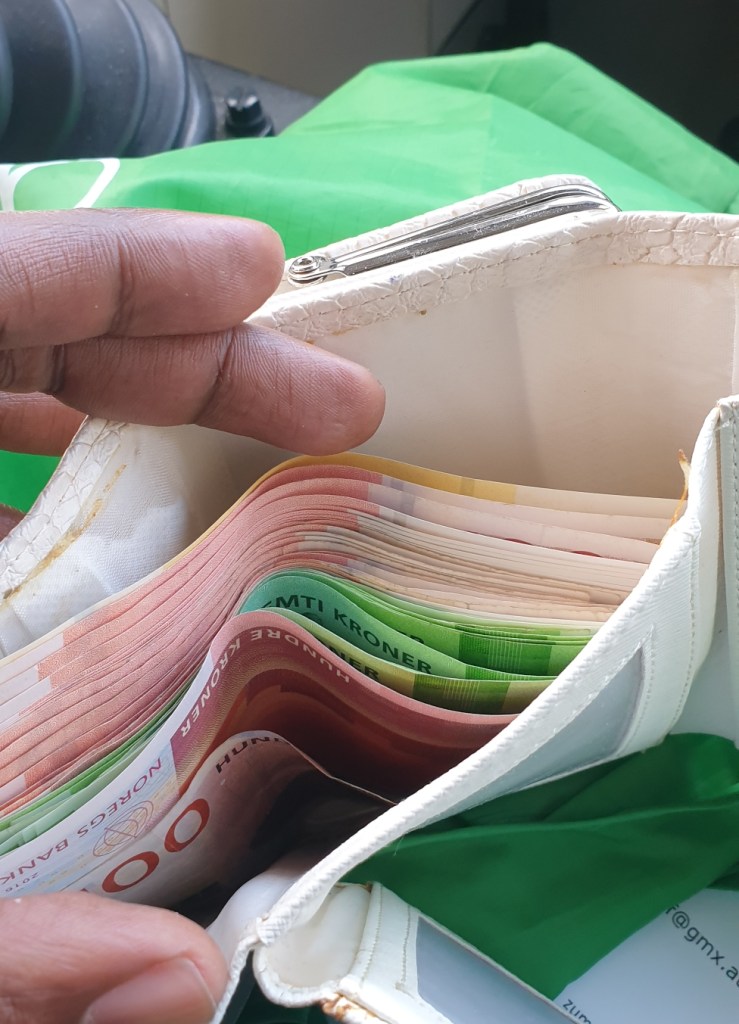
Having those experiences on the same days is entirely mind-blowing. Whenever I think of those experiences, I feel so happy about my honesty and how I saved that old man from the stress of explaining how he lost his daughter’s belongings. How did you feel when you read the joy the nurse had upon receiving his phone and the relief the old man had when he got his green bag back? A narrative is a powerful tool in triggering the right parts of our brain in response to a gratitude practice.

Next time tell a story about something good you did to someone and experience the surge of happiness as you recall the incident.
Your mind is your Keeper, not Your Friend.

21st October, 2019 was a significant turning point in my life. My best friend took her own life, and I was one of the last people to talk to her. She told me exactly what she wanted to do, and all my efforts to talk her out of it could not save her. She had made up her mind, or I should say her mind had made her up.

I have since been studying to understand how the human mind works, what leads young persons full of life to lose completely their desire to live. I have come to a few realisations which I want to share with you, dear friends. These are my thoughts and I recommend professional help should you need it.

To begin with, I have to admit the thought of suicide has crossed my mind at a very low point in my life, and it was scary for me, and I am lucky that I had the help I needed to free myself from those self-destructive thoughts.

Your mind has the sole purpose of keeping you in your comfort zone. That is why every time you want to undertake something new and challenging, there will always be that small voice of your mind trying to talk you out of it. Whether it is making a career change, going on a new date, talking to strangers or even trying a unique fashion. Anything that might require you to redefine yourself or push you to unknown territory, that small voice will always be there, giving you all the reasons why it is a bad idea. The same applies when you want to let go of an old habit that is no longer beneficial for you, like smoking, social media, or binge-watching. The small voice will be like ‘one last time, it is not the right time, this is not you etc.’

We strive to be happy, and we believe that happiness is about constantly doing the right things. Still, I have learnt that there is a surge in happines every time I embark on a new challenge and achieve it. I feel good when I am constantly improving myself and proving that small voice wrong.

That voice of the mind, though small, is so powerful. It takes a lot of discipline and courage to go against it. The voice of the mind is unforgiving when the new endeavour turns out unsuccessful. The small voice will not be small anymore; it will go all out telling you how it was a bad idea, and you shouldn’t have done that. It takes advantage of the feeling of disappointment to make you feel even more miserable. It goes to great lengths to make sure that you stay in your comfort zone.

I now understand why there are fewer legitimate successful people than the vast majority of us enslaved to routine. Most of us are living or rather surviving like programmed robots. Years in the same career which you are unhappy about. Always attracting the same people in your life. Looking for the food you are familiar with whenever you visit a different place. Self-sabotaging yourself when you are faced with a challenge even before you started.

My best friend was desperately seeking to change her life. She knew that if she continued living the way she was, she would never be happy. She fancied being a successful independent woman. She had enormous goals and a clear vision of how she wanted her life to be in the future. But with every setback, the small voice of her mind was unforgiving. I remember how bit up she would be when her business proposals were turned down. The guys she met turned out to be the exact type she was avoiding. At some point, her dream for the kind of life she desired was utterly dwarfed by the self-critic, and self-loathe the small voice imposed. She couldn’t see the value of living anymore if her life was not the life she wanted.

The small voice doesn’t want you to kill yourself; instead, it wants you to stay the same. Suicidal thoughts result from being overwhelmed by grief brought about by not getting what you want. Or even though one might not be suicidal, there can be long spurts of unhappiness leading to depression.

The small voice will always be there; we just need to mitigate its impact on our well-being. There will always be days where you would rather stay in bed and wallow in your misery. There will be days where you will be punished by your small voice for attempting to go out of your comfort zone and failing. However, there will be days where you will get that surge of happiness after facing an unmanageable task and going against the small voice and hitting a home run. Thus shutting the noise of that small voice up and levelling up in your life.

I have come to understand how to reduce the impact the small voice has on my life. First of all, minimising the effect of other people’s opinions on my life, especially those who really don’t matter. I remember my kids; when they were toddlers, they were not scared to try new stuff because they could still not understand the concept of other people’s expectations. When people hold you to their expectations, and you don’t live up to them, then it is not just the small voice that you have to deal with.

Second, be kind to yourself. I have really managed to contain the bad days by cuddling myself and talking nicely to myself. Just telling myself that it didn’t go well this time and that there will be the next time has helped me stop the negative emotions from escalating to a full-blown nervous breakdown. It also helps a lot when you have someone who really cares about you and they can listen without being judgemental.

Third, try as much as you can to distract your thoughts. A philosopher said that when people wish for peace of mind, they actually want peace from mind. When that voice goes into a ranting rampage, put on your favourite music (not depressive tunes) and dance, or go for a walk or a run. Many have found physically intense activities to be very helpful. When your body moves, your mind grooves.

Stress hormones are released to your body (top-bottom effect, mind controlling body) when your mind goes apeshit with negative emotions. That’s why you feel miserable. When you do something intense like dancing, running, cleaning etc., your body uses those stress hormones in the activities and calms the mind down (bottom-top effect body relaxes mind).

Lastly, break down your monstrous goals into small manageable bits and celebrate each step. Getting a six-pack within 6 months could start with 30 seconds of planks or 10 press-ups every day. Remember to celebrate every day you do it. Getting a dream car could start with saving x amount every month or doing a side hustle. Celebrate every small achievement.

What if you miss a day or you fall back on your progress? Be kind to yourself. No one is perfect. Those who matter won’t judge, and those who judge don’t really matter. Get up try again. Start having satisfaction and enjoyment in the process rather than the result.

I have not yet gotten where I want to be. The small voice of my mind was as noisy as always when I decided I wanted to write this article after a long break from writing. I am grateful for its presence because it keeps my ego in check.

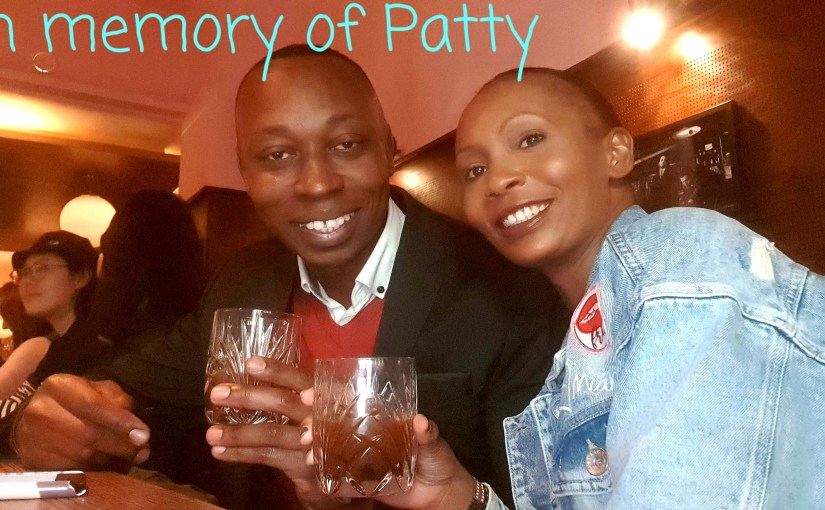
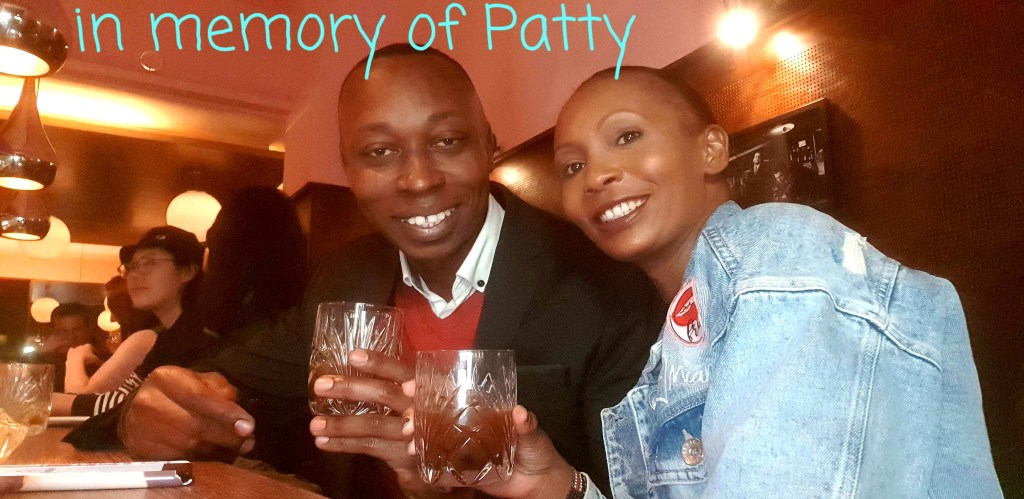
Even though I miss her terribly, my best friend Patricia, I have learned a lot because of her. She wouldn’t mind about my slow progress; that’s why she matters, and to those who mind, I know your small voices are imposing your expectations on me and others. Be kind to yourself and to other people. RIP, my friend.