Introduction
At 4,000 meters above sea level, the air doesn’t just get thin; it becomes an interrogator. I stood on the slopes of Kirinyaga(native name of Mt. Kenya)—the Place of Brightness— not as a prepared mountaineer, but as a man stripped of his urban pretences by altitude sickness, throbbing headache, exhaustion, and a freezing wind that seemed to mock my lack of preparation. We are taught by modern society that happiness is found in the avoidance of pain, yet there I was, voluntarily shivering in the dark, my lungs gasping for a resource I had always taken for granted. In that state of self-induced suffering, a profound epiphany began to crystallize: the ‘true happiness’ I have been searching for in my writing is NOT found in the comfort of the valley, but in the brutal honesty of the climb. I had to be broken by the mountain to realize that we never ‘conquer’ nature or our history; we simply have to endure long enough for them to reveal our true selves to us. At that point of the climb, hands on my knees, head sunk below my shoulders, gathering whatever sparks of energy left in my tank to make the final push to the summit, I understood that getting to the summit was not the experience but every step I had taken to get there was what mattered. I lifted my pounding head to look up at the barely visible summit, which was but a few hundred metres away, covered by thick clouds and the orange-red rays of the breaking dawn, and I knew that all that counted was to put one foot forward.
The Spark of Defiance (The Valley)
In mid-October 2025, I found myself collapsed on my couch, head in hands, paralyzed by the weight of everything I was carrying: work, school, family, and the sting of failed business ventures. The Austrian winter had arrived early—grey, biting, and mirrored by the moody faces of people in the streets. I felt a profound sense of burnout, a joyless void that even therapy couldn’t quite fill. My therapist’s advice was logical: ‘Slow down; stop chasing too many rabbits.’ But the vigour of life felt out of reach until one late-night binge watching YouTube videos of mountaineers sparked a memory of my best friend, James, summiting Mt. Kenya years ago. In that moment, a lightbulb flickered to life. I didn’t just want to survive the end of a brutal year; I wanted to finish it with a roar. I decided then to climb Mt. Kenya—not just for my own clarity, but for a cause larger than myself: to raise funds to build classrooms and purchase desks for a struggling primary school in my rural village. I had exactly six weeks to prepare for the ascent.
The irony was not lost on me: to heal my mental exhaustion, which felt like depression, contrary to my therapist’s urge to slow down and rest, I chose to pursue a different kind of exhaustion; my spirit demanded a climb. Those six weeks of preparation became a frantic ritual of ‘deconditioning’—unlearning the comfort of my Austrian apartment to embrace the thin, punishing air of Kirinyaga. I was under-prepared, under-trained, and arguably over-ambitious. But as I began the journey toward the mountain, I realized that the desks I wanted to buy for those children were no different from the summit I was seeking. Both required the same thing: the willingness to suffer for something that matters. Those kids at Sifuyo Primary School would walk kilometres every day to go sit on the floor and broken desks to learn and have a chance of a better life in the future. I left the valley of my depression and headed for the peaks, unaware that the mountain was about to break me in ways no therapy ever could.
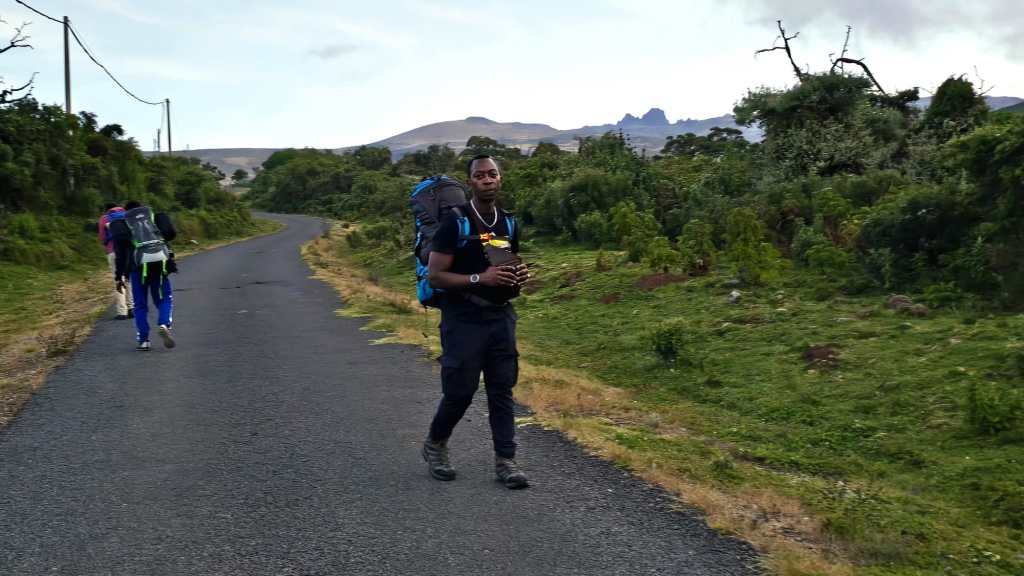
Preparation was less of a strategy and more of a scramble. Armed only with a Google search and a limited budget, I began hunting for gear in Austrian flea markets and scouring special offers for boots and layers I barely understood. I needed company for the climb, so I invited Dan, my younger brother, to join me. My brother, ever the realist, initially found the plan absurd—how does one summit Africa’s second-highest peak with zero training? Yet, the absurdity proved contagious. Not only did he join, but he recruited our eighteen-year-old brother, David, and two of his friends. A surprise new member of the climb party was my mother’s physiotherapist, who, upon hearing my ‘joke’ about the climb, immediately asked to join the ranks. Suddenly, we were a team of six untrained dreamers. In a final act of defiance coupled with naive frugality, I proposed we save money by going without a guide, but my brother, the realist, would not sign into more absurdity; he insisted on professional help and hired our guide Wamururu and his team—a choice that would eventually prove to be the most valuable investment of the entire journey.
Life Lesson: Happiness isn’t found in the avoidance of pain, but in the willingness to suffer for something that matters.
Join our mission to renovate classrooms and provide desks for Sifuyo Primary School here: Support the Project
Next in Part 2: The Deceptive Handshake—When the mountain stops being a backdrop and starts being an opponent.
 jackmugoya