Making your Mind your friend through Gratitude.
Gratitude is a very portent practice in bringing joy and well-being into life. The personal development sector is awash with numerous articles on why and how to use Gratitude as a practice to bring happiness, positivity and success into your life.
There are many ways of practising Gratitude. The most common is thinking of stuff you are grateful for, writing them down every day, and reflecting on them. I have tried that for some time, and it has had little effect on me. Waking up every day and thinking of what I am grateful for has given me an excellent start to the day. But that lasted only a couple of hours. After a week of doing that, I found myself scratching my head to find new stuff that I can be grateful for so that I am not constantly repeating myself. Sooner or later, I quit the practice altogether because I was no longer getting the desired effect.
Then I heard a podcast by Andrew Hubermann https://youtu.be/KVjfFN89qvQ. He explained where most people, including myself, get it wrong with the Gratitude practice. In this blog entry, I will not water down Dr Hubermann’s work by attempting to summarise it. So I urge you, dear reader, after reading my blog, go listen to it. It will definitely positively change the way you practice Gratitude.
My previous gratitude practice didn’t work because, at some point, the emotional connection was cut off between what I am grateful for and how I am feeling at that moment. Dr Hubermann explains: “you can’t fool your mind”, if the moment is crapy, it is crapy.
Now, the better gratitude practice entails remembering a moment where you genuinely received Gratitude from someone after you are done doing them a good did. Closing your eyes and visualising this moment has a tremendous impact on producing happy hormones. Studies have shown that the brain activity in Raphe Nucleus, which makes the happy hormone serotonin, is triggered by this practice of Gratitude.
It goes dipper when you hear of a story of how someone helped out another and was genuinely appreciated; as a result, the same part of the brain is also activated. That is why bible stories of Jesus are so powerful. Because they show how a compassionate man helped out needy fellows.
I decided to try out the practice as suggested by Dr Hubermann. So, my day job is driving the Tram. As I cruised one day, I tried to remember how I helped someone and they were genuinely grateful. I remembered how I approached a station some time ago and saw a phone lying on the ground. I stopped the Tram, came out and picked the phone from the ground. Then, after a while, the phone rang, and I answered to a distressed woman’s call who was thanking me so much for finding her daughter’s phone. I handed it back to her at my break and kindly declined a 10 euro reward from her. She was so grateful and wished me God’s blessings.
I smiled to myself, enjoying the sudden surge of serotonin in my system. But what happened next, I was not prepared for. At that very station, someone interrupted my bliss trip with a knock in my cabinet. He said he found a phone lying on the chair; someone must have dropped it and asked if I would be so kind as to give the owner if they called. How weird was that? I gladly accepted and thanked the man for his honesty and wished him a pleasant day.
The owner of the phone called and said he could not pick up the phone as he is a nurse at a hospital. I offered to bring it to him during my long break. He was delighted and tried to give me a 20 euro reward, which I again declined. I went back to work feeling so happy.
If you think that is the end of it all, you are not yet ready for this. Later that day, as I was doing the final round with the Tram, I went around checking for any lost and found items. I indeed found a green shopping bag. I took it with me to my driver’s cabin. I inspected to see if there were any valuables or contacts for the owner. I saw a purse and printouts with a name and address. In the purse were bills of an estimated 10,000 euros. As I debated in my mind whether to take the shopping bag to the police or deliver it personally to the owner, again, someone knocked at my driver’s cabin. It was a distressed old man. He asked if I had found a green shopping bag. I asked him for a name to confirm that it belonged to him. He gave his daughter’s correct names on the documents and explained that he was supposed to take the items to her, and he had feared he had completely lost them.
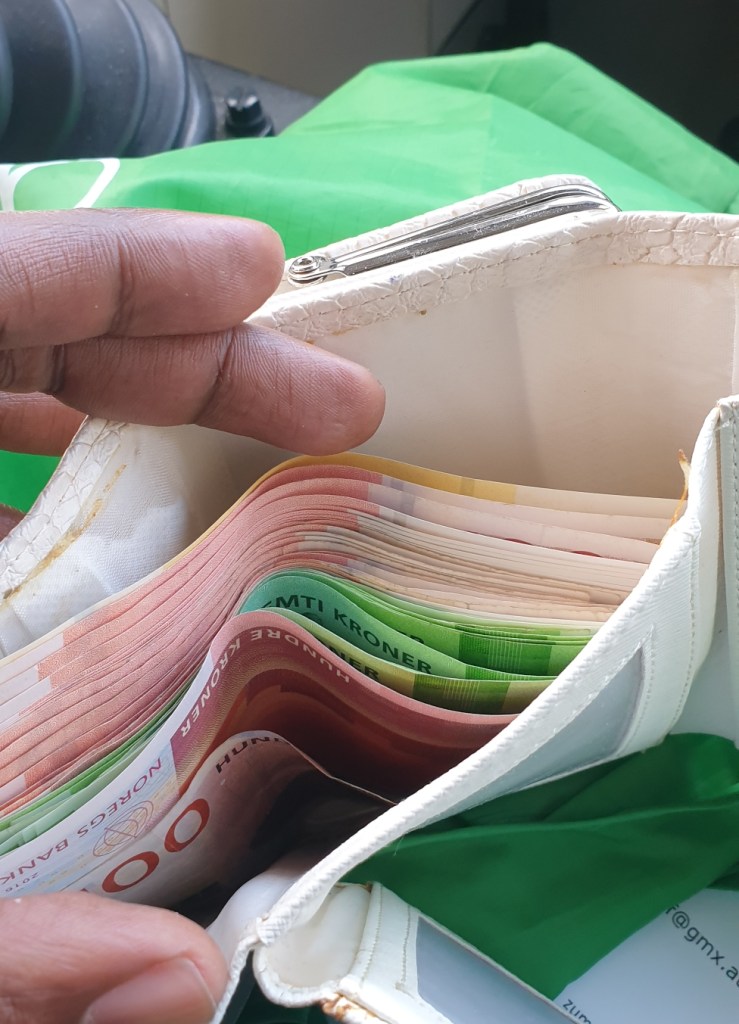
Having those experiences on the same days is entirely mind-blowing. Whenever I think of those experiences, I feel so happy about my honesty and how I saved that old man from the stress of explaining how he lost his daughter’s belongings. How did you feel when you read the joy the nurse had upon receiving his phone and the relief the old man had when he got his green bag back? A narrative is a powerful tool in triggering the right parts of our brain in response to a gratitude practice.
Next time tell a story about something good you did to someone and experience the surge of happiness as you recall the incident.
 jackmugoya